
Can You Actually Time a Slot Machine? Myths Debunked
 Niklas Ackermann
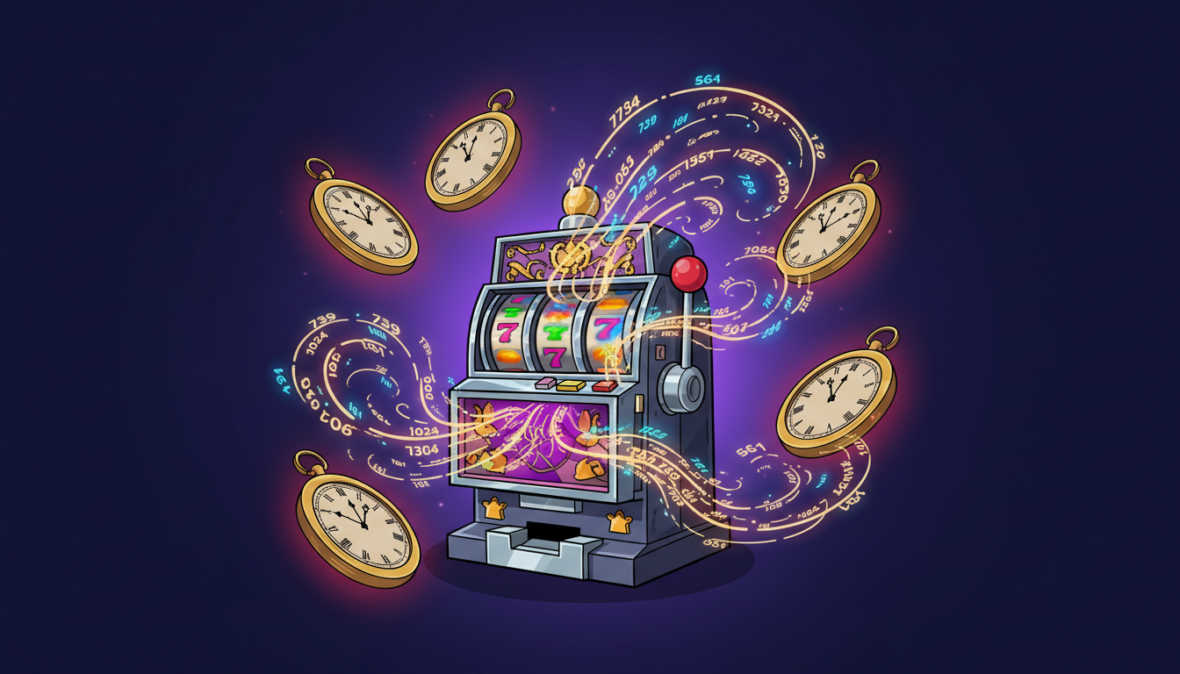
For decades, the alluring glow of slot machines has captivated players worldwide. From the dazzling lights of Las Vegas to the convenience of online platforms, these games of chance promise excitement and, for some, the dream of a life-changing jackpot. With such high stakes and the sheer unpredictability inherent in their design, it’s perhaps no surprise that a multitude of theories and superstitions have emerged over the years. Chief among these is the persistent belief that one can somehow “time” a slot machine, predicting when it’s about to pay out or, conversely, when it’s going to be “cold.”
As someone who has spent a significant portion of my career observing, analyzing, and even helping to design aspects of the gaming industry, I’ve heard every theory imaginable. Today, I want to cut through the noise, separate the romanticized fiction from the stark reality, and offer you genuine insight into how these fascinating contraptions actually operate. My goal isn’t to diminish the fun, but to empower you with knowledge, allowing you to approach these games with a clearer understanding and, perhaps, even greater enjoyment. Let’s pull back the curtain and truly understand if timing slots is a viable strategy or merely a gambler’s fallacy.
The Enduring Appeal of the Timing Myth

Why do so many people cling to the idea of timing a slot machine, even when evidence points to the contrary? It boils down to fundamental aspects of human psychology. We are pattern-seeking creatures. Our brains are wired to find connections, even where none exist. When we see someone hit a jackpot moments after we walk away from a machine, or when a machine pays out after a long dry spell, our minds immediately try to construct a narrative, a cause-and-effect relationship.
This phenomenon is often called confirmation bias. We tend to remember the instances that support our beliefs (like the “lucky” spin after a long wait) and conveniently forget the countless times a machine remained stubbornly tight, regardless of how long it had been played. There’s also the powerful desire for control. Gambling, by its very nature, involves relinquishing a degree of control to chance. The idea that we could somehow outsmart the machine, decipher its rhythm, or anticipate its next move, provides a comforting illusion of agency in an otherwise random environment.
Stories of “hot” and “cold” machines circulate endlessly. Players swear by observing others, waiting for a machine to seem “due,” or avoiding one that “just paid out.” These anecdotes, passed from player to player, create a powerful oral tradition that reinforces the myth, making it incredibly difficult for many to accept the technical truth. But the truth, as we’re about to explore, is far more mechanical and, ironically, far more random than most people imagine.
The Unseen Engine: Understanding the Random Number Generator (RNG)
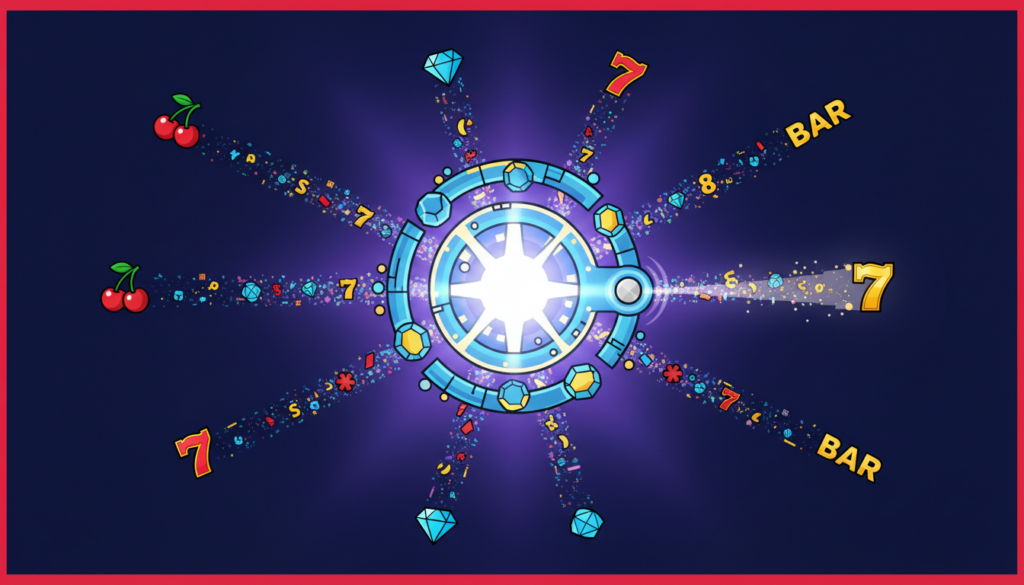
To truly understand why timing a slot machine is impossible, we must first grasp the core technology that powers every modern slot game, whether it’s a physical machine in a casino or an online version accessible from your couch. This technology is the Random Number Generator, or RNG.
Forget any notions of gears, levers, or mechanical patterns. Modern slot machines are essentially sophisticated computers running complex software. The RNG is a highly advanced algorithm, a mathematical program that constantly generates sequences of numbers, millions of them per second, even when the machine is idle. These numbers correspond to the symbols you see on the reels.
Crucially, each spin is an entirely independent event. When you press the spin button, the RNG instantaneously selects a combination of numbers. This combination determines exactly where the reels will stop and what symbols will appear. The previous spin has absolutely no bearing on the next spin. It’s like flipping a coin: if you get heads ten times in a row, the probability of getting heads on the eleventh flip is still precisely 50%. The coin has no memory. Similarly, a slot machine’s RNG has no memory of past outcomes. It doesn’t know if it just paid out a jackpot, if it’s been played for hours without a win, or if you’ve been feeding it money for twenty minutes. Each press of the spin button is a fresh start, a new, completely random calculation.
This continuous, independent generation of numbers is the fundamental reason why any attempt to “time” a slot machine is ultimately futile. The machine isn’t waiting for a certain number of spins, a specific amount of money to be inserted, or a particular time of day to pay out. Its outcomes are determined by an algorithm designed for pure, unpredictable randomness.
Debunking Specific Timing Myths
Armed with an understanding of the RNG, let’s systematically dismantle some of the most common timing myths that permeate the slot machine world.
Myth 1: “Hot” and “Cold” Machines
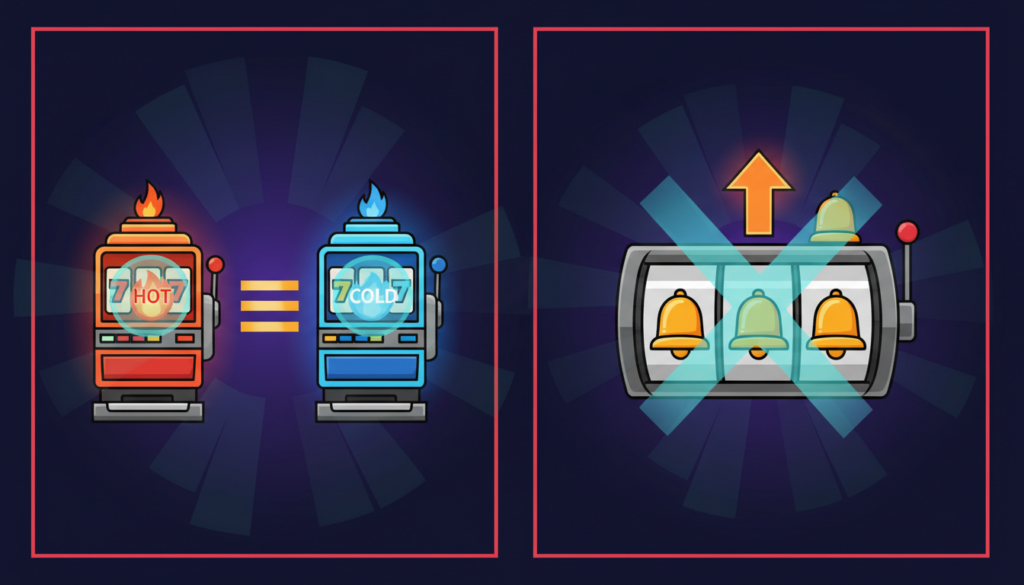
This is perhaps the most pervasive myth. Players often categorize machines as “hot” (paying frequently) or “cold” (not paying). The belief is that you should play a hot machine to ride its streak or wait for a cold machine to become “due” for a big payout.
The Reality: As explained, the RNG ensures that each spin is independent. A machine that has been paying out frequently isn’t “hot” in the sense that it’s more likely to continue paying. It’s simply experiencing a short-term statistical anomaly, a lucky streak that is entirely random. Conversely, a machine that hasn’t paid in a while isn’t “cold” or “due.” Its past performance has no influence on its future payouts. The probabilities remain the same for every single spin, regardless of previous results. The “hot” or “cold” perception is a human interpretation of random fluctuations, not an inherent state of the machine.
Myth 2: “Near Misses” Indicate a Win is Coming
You’ve undoubtedly experienced it: two jackpot symbols land, and the third one stops just one position short. It’s designed to be frustratingly close, creating a rush of adrenaline and the feeling that you were almost there. Many players interpret these “near misses” as a sign that a big win is imminent.
The Reality: Those near misses are a deliberate design feature, but not for the reason you might think. They are programmed to enhance excitement and engagement, making the game feel more dynamic and keeping players hopeful. However, the outcome of the spin is already decided by the RNG the moment you hit the button. The animation of the reels spinning and stopping is purely for entertainment. A near miss doesn’t mean the machine was “close” to paying out; it means the RNG determined an outcome that resulted in a near miss. It carries no predictive power for the next spin. The odds of hitting the jackpot on the very next spin are precisely the same as they were on the near-miss spin.
Myth 3: Playing at Certain Times of Day or Week
Some players believe that slot machines pay out more at specific times, perhaps late at night when casinos are less busy, or during weekends when there’s more traffic. The idea is that casinos might adjust payouts to attract or reward players during certain periods.
The Reality: Slot machines do not have internal clocks that influence their payout mechanisms in this way. The Return to Player (RTP) percentage of a slot machine is set during its manufacturing and is typically regulated by gaming authorities. This percentage dictates the long-term average payout. While casinos might, in rare cases and with regulatory approval, adjust the RTP settings on a bank of machines, this is a complex, time-consuming process, not something that happens dynamically based on the time of day. The RTP of a specific game remains constant regardless of how many people are playing or what time it is. Your chances of winning are the same at 2 AM on a Tuesday as they are at 8 PM on a Saturday.
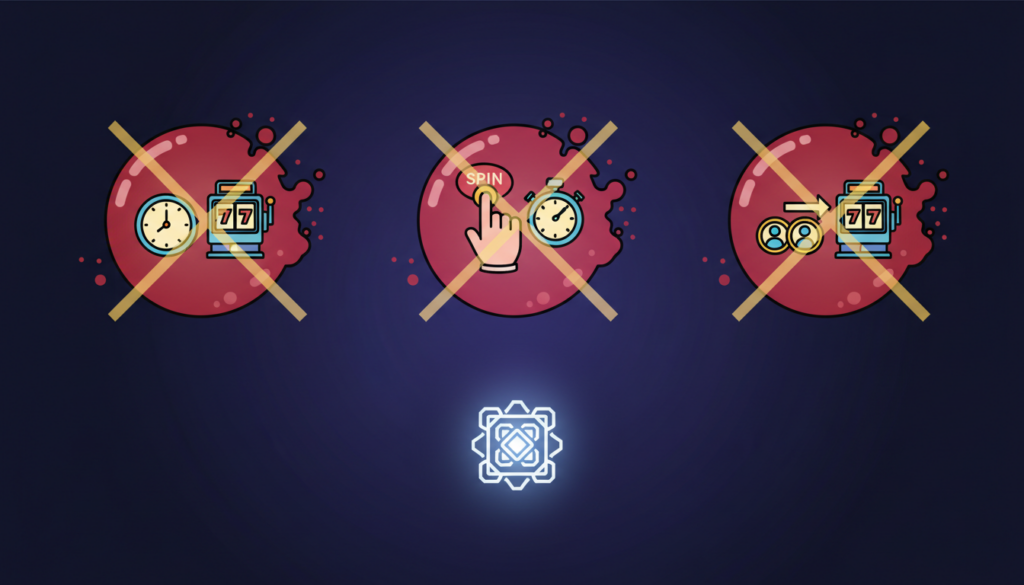
Myth 4: Manipulating the Spin Button or Lever
In the old days of mechanical slots, a certain “feel” or technique with the lever might have been imagined. Today, some players still believe that pressing the spin button at a precise moment, or varying the speed of presses, can influence the outcome.
The Reality: This is entirely incorrect for modern slot machines. The moment you press the spin button (or pull the lever), the RNG has already determined the outcome of that particular spin. The reels then spin and stop in a pre-determined sequence to display that outcome. Your interaction with the button or lever is merely an input that triggers the RNG’s calculation; it does not influence the calculation itself. The animation is just that: animation. There’s no skill or timing involved in hitting the button.
Myth 5: Observing Other Players’ Sessions
“That person just spent a fortune on that machine, it has to pay out for me now!” or “They just won big, so I should avoid that machine because it won’t pay again soon.” These are common thoughts.
The Reality: Once again, the RNG is the key. Another player’s luck, whether good or bad, has absolutely zero bearing on your subsequent spins. Each session, each player, each spin, is a distinct, independent event. The machine does not “store” its past payouts or losses in a way that influences future outcomes for the next player. You could sit down at a machine where someone just hit a mega jackpot, and your odds of winning on your first spin are exactly the same as if you sat down at a machine that hadn’t paid out in days.
What Actually Matters: Payouts and Volatility
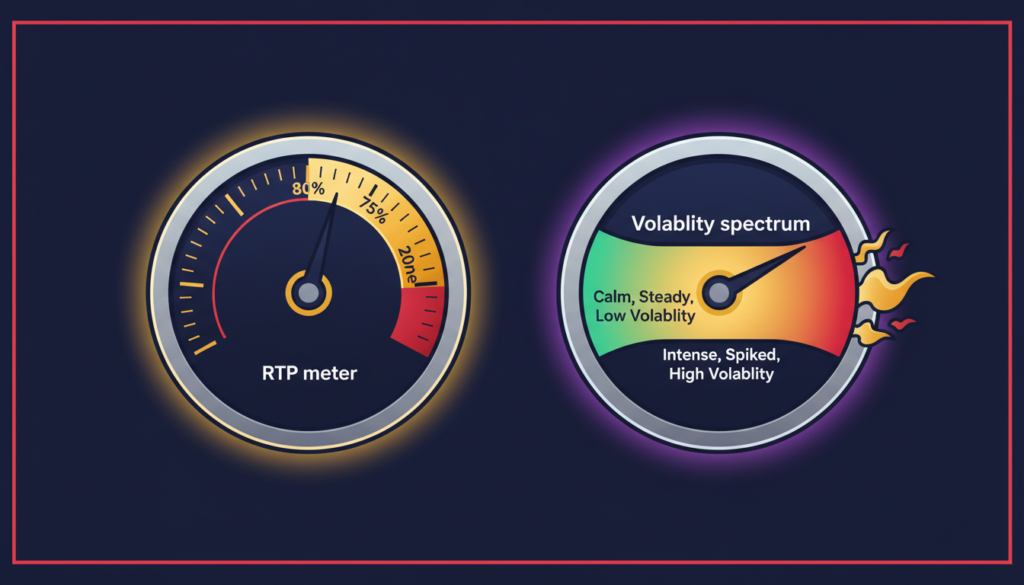
Since timing slots is a myth, what factors genuinely influence your slot machine experience and potential for winning? There are two critical concepts to understand: Return to Player (RTP) and Volatility (or Variance).
Return to Player (RTP)
The RTP is a theoretical percentage that indicates the proportion of all wagered money a slot machine will pay back to players over an extended period. For instance, a slot with a 96% RTP means that, on average, for every $100 wagered, the machine will return $96 to players over millions of spins.
It’s vital to remember that RTP is a long-term average. It does not guarantee that you will get $96 back for every $100 you play in a single session. In a short session, anything can happen: you could lose all $100 or win much more. The RTP simply reflects the machine’s overall profitability for the casino over its lifetime. Higher RTP percentages generally offer better theoretical returns for players. You can often find a game’s RTP listed in its information section or paytable, especially with online slots.
Volatility (Variance)
Volatility, also known as variance, describes the risk level associated with a particular slot game. It essentially tells you how often and how much you can expect a game to pay out.
- High Volatility Slots: These games tend to pay out less frequently, but when they do, the wins are often larger. They can be thrilling for players seeking big jackpots but require a larger bankroll and more patience to weather the dry spells. The swings between wins and losses can be significant.
- Low Volatility Slots: These games pay out more frequently, but the wins are typically smaller. They are better suited for players who prefer a more consistent stream of smaller payouts and want to extend their playtime with a modest bankroll. The risk is lower, but so is the potential for massive, life-changing wins.
Understanding volatility is crucial for managing your expectations and your bankroll. If you have a small budget and want to play for a longer period, a low-volatility game might be more suitable. If you’re chasing that huge jackpot and have the bankroll to absorb significant losses, a high-volatility game could be your preference.
The Only “Strategy” That Works: Responsible Play

Given that timing and prediction are impossible, what can a player do to enhance their slot machine experience? The answer lies not in finding a secret trick, but in adopting a responsible and informed approach to gaming.
- Set a Budget and Stick to It: Before you even sit down or log in, decide how much money you are willing to spend and, more importantly, willing to lose. Once that budget is gone, walk away. Never chase losses.
- Manage Your Time: Similarly, set a time limit for your play session. It’s easy to lose track of time when engrossed in a game.
- Understand the Game: Take a moment to read the paytable and rules. Familiarize yourself with the game’s features, bonus rounds, and, if available, its RTP and volatility. This knowledge helps you make informed choices about which games to play.
- Play for Entertainment: Slot machines are designed as a form of entertainment. Approach them with that mindset. The occasional win is a bonus, but the primary goal should be to enjoy the experience. If you stop having fun, or if gambling becomes a source of stress or financial strain, it’s time to stop.
- Utilize Responsible Gaming Tools: Many online platforms offer tools like deposit limits, loss limits, and self-exclusion options. Use them to help maintain control over your gaming habits.
Maximizing Your Slot Experience Without Timing Myths
Since you cannot predict when a machine will pay out, the smartest approach is to use available tools and offers wisely. Free spins - En free spins provide an excellent opportunity to test various slots and explore different volatility levels without risking your own bankroll. This allows you to find games that genuinely match your preferences and playing style, independent of any timing considerations.
Additionally, cashback offers - En cashback offers can help offset losses from slots you might play based on mistaken timing theories, converting potential losses into partial returns. Rather than trying to predict payout timing, these tools help you mitigate risk through smart promotional use.
For players who want to extend their sessions and continue exploring different slots, reload bonuses - En reload bonuses can help stretch your bankroll further, allowing for more extended play without the need to rely on faulty timing assumptions.
Online Slots vs. Land-Based Slots: Any Difference?
A common question is whether the mechanics of online slots differ from their land-based counterparts. Fundamentally, no. Both types of slot games rely on the same core principle: the Random Number Generator. The RNG is the engine for both.
Online slots often have the advantage of greater transparency regarding their RTP, which is usually readily available in the game’s information section. Land-based casinos might have a wider range of RTPs across their machines, and this information isn’t always as easily accessible to the player. However, the underlying randomness and the impossibility of timing remain consistent across both formats.
The Final Word: Embrace the Randomness

The notion of timing a slot machine is a compelling fantasy, a testament to our human desire to impose order on chaos. However, the reality, grounded in the sophisticated technology of the Random Number Generator, firmly debunks this myth. Every spin is an independent event, a fresh roll of the digital dice, entirely unaffected by what came before or what might come next.
Understanding this fundamental truth doesn’t diminish the thrill of playing slots; in fact, it can enhance it. When you let go of the illusion of control and the stress of trying to predict the unpredictable, you can truly appreciate these games for what they are: exciting, engaging forms of entertainment driven by pure chance. Focus on responsible play, managing your bankroll, understanding the game’s characteristics (RTP and volatility), and most importantly, enjoying the dazzling, unpredictable ride. That, my friends, is the only winning strategy when it comes to slot machines.