
Live Dealer vs. RNG Tables: Which is fairer?
 Niklas Ackermann
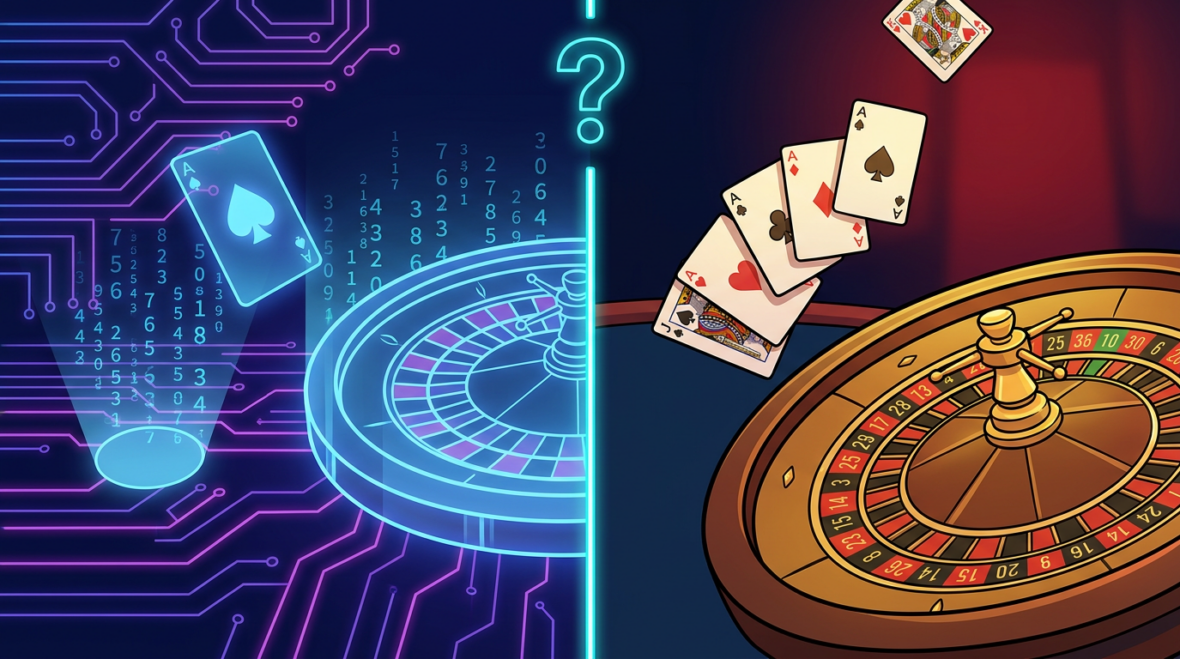
One question consistently surfaces among players, new and seasoned alike: “Is this game fair?” It’s a fundamental concern, and rightly so. When real money is on the line, trust in the system is paramount. Today, we’re going to pull back the curtain on the two dominant formats in online casinos: the traditional Random Number Generator (RNG) tables and the more recent Live Dealer games. Our goal isn’t just to explain how they work, but to address that core question of fairness head-on.
It’s easy to get caught up in the allure of big wins, but savvy players know that understanding the mechanics and assurances of fairness is a far more valuable strategy. Both RNG and Live Dealer games offer thrilling experiences, but they operate on distinctly different principles that shape how we perceive their impartiality. Let’s break them down.
The Digital Heartbeat: Understanding RNG Tables
Imagine a tireless, lightning-fast digital engine working behind the scenes. That’s essentially what an RNG is. Short for Random Number Generator, this is the technology that powers the vast majority of online casino games that don’t feature a human dealer. Think of your favorite online slots, video poker, or the classic digital blackjack and roulette tables; they all rely on an RNG.
How RNGs Work Their Magic
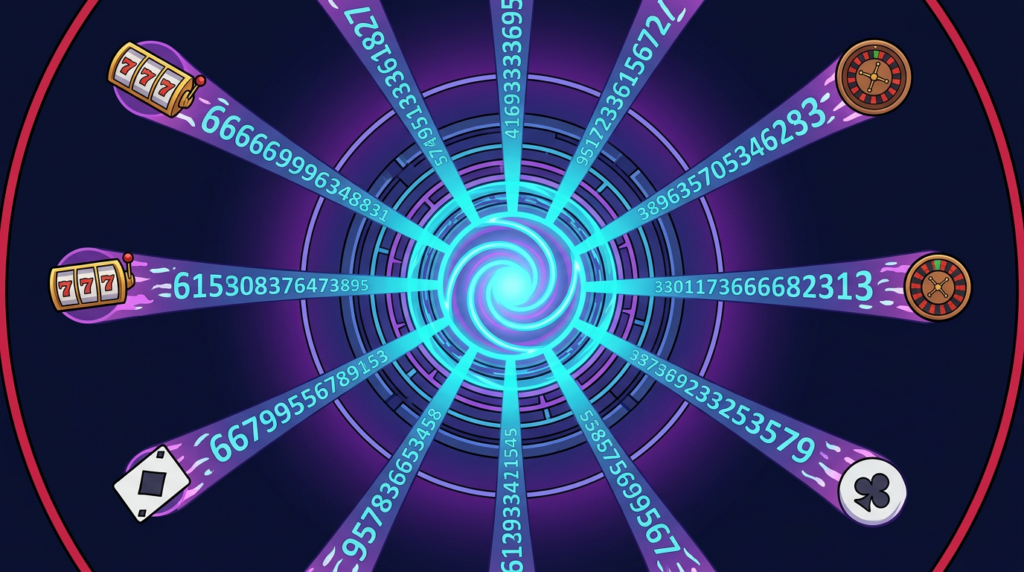
At its core, an RNG is an algorithm, a complex set of mathematical instructions, designed to produce sequences of numbers that lack any discernible pattern. These numbers are then translated into game outcomes. For instance, in a slot game, the RNG might generate a series of numbers that determine which symbols land on the reels. In roulette, it dictates where the ball “lands” on the virtual wheel. For card games, it “shuffles” and “deals” the virtual deck.
The key word here is “random.” A truly random sequence means that each outcome is independent of the previous one, and its probability is consistent. There’s no memory of past results, no “due” outcomes, and no external influence. This is crucial for maintaining fairness.
Addressing Player Skepticism
It’s completely natural for players to be skeptical of something they can’t physically see or touch. How can a computer program be truly random? We’ve all had those moments where we feel like a game is “cold” or “rigged” after a string of losses. This is where regulatory oversight steps in.
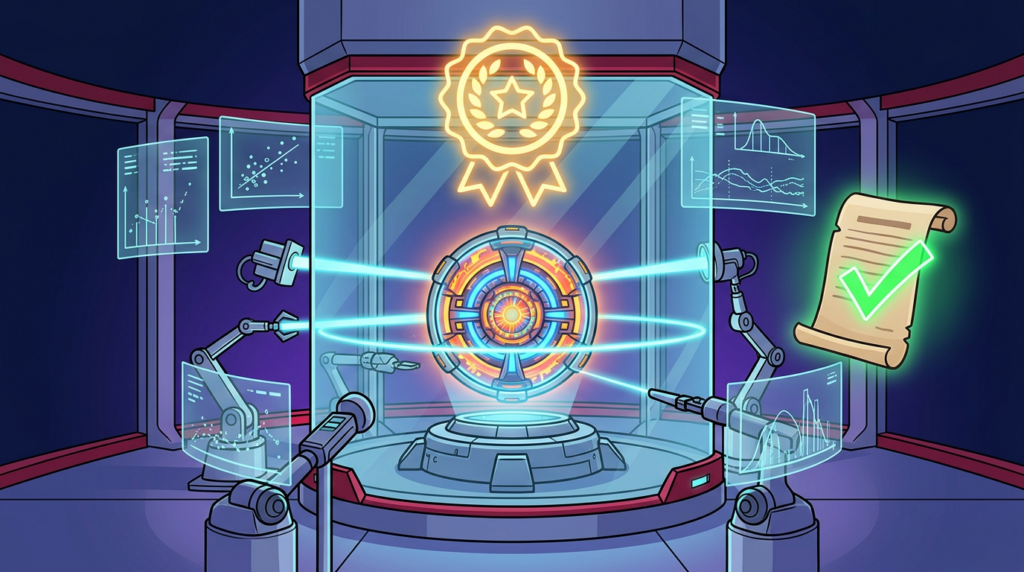
Reputable online casinos don’t just claim their RNGs are fair; they prove it. This proof comes in the form of regular audits and certifications by independent testing agencies. These organizations, often internationally recognized, use sophisticated statistical analysis to verify that the RNGs produce truly random outcomes, that the game’s stated Return to Player (RTP) percentage is accurate, and that there are no biases or predictability in the results. They check for things like cycle length, statistical distribution, and unpredictability. If an RNG passes these rigorous tests, it’s certified as fair.
The Upsides and Downsides of RNG
Pros of RNG:
- Speed: Games play out quickly, allowing for more rounds in a shorter time.
- Accessibility: Available 24/7, with no waiting for a seat at a table.
- Variety: A vast array of game types, themes, and betting limits to suit every preference.
- Privacy: You can play completely anonymously without interacting with others.
- Lower Stakes: Often offers much lower minimum bets, making them accessible to more players.
Cons of RNG:
- Perceived Lack of Human Element: Some players miss the interaction and visual transparency of a physical game.
- Suspicion of Manipulation: Despite certifications, the invisible nature of the RNG can foster distrust among some players.
- Less Immersive: The experience can feel less engaging compared to a live game.
The Human Touch: Exploring Live Dealer Tables
If RNG tables are the digital heart of online gaming, Live Dealer tables are its vibrant, beating pulse. This format bridges the gap between the convenience of online play and the authentic atmosphere of a land-based casino. Here, you’re not playing against a computer program; you’re interacting with a real human dealer, using actual cards, wheels, and dice, all streamed to your device in real-time.
How Live Dealer Games Bring the Casino to You
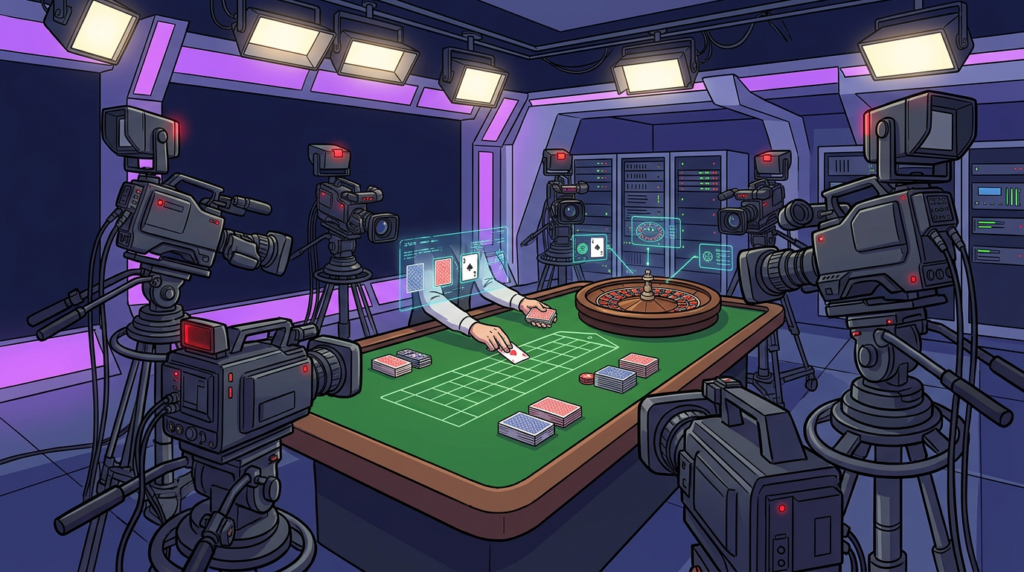
Live Dealer studios are purpose-built facilities, often resembling high-tech television sets. Professional dealers, trained in casino etiquette and game rules, host the games. Multiple high-definition cameras capture every angle of the action: the shuffle, the deal, the spin of the roulette wheel, or the roll of the dice.
Optical Character Recognition (OCR) technology plays a vital role here. This sophisticated software translates the physical actions of the game (like the value of a dealt card or the number the roulette ball lands on) into data that your online account can understand and process. This means your bets are registered digitally, but the game’s outcome is determined by physical, tangible equipment. You can often chat with the dealer and sometimes even other players, adding a social dimension to the experience.
The Appeal of Tangible Randomness
The primary appeal of Live Dealer games lies in their transparency. Players can see the cards being shuffled and dealt, watch the roulette ball spin and land, and observe the dice being rolled. This visual confirmation goes a long way in building trust. It feels more akin to being in a traditional casino, where the randomness is generated by physical processes, not hidden algorithms.
Just like RNGs, Live Dealer operations are subject to stringent regulatory oversight. Licensing bodies ensure that the studios operate fairly, that dealers are properly trained, that equipment is regularly inspected for tampering, and that the games adhere to strict rules of play. The physical environment itself is often monitored by pit bosses and security personnel, just as in a brick-and-mortar establishment.
The Upsides and Downsides of Live Dealer
Pros of Live Dealer:
- Transparency and Trust: You witness the physical action, which can significantly enhance confidence in fairness.
- Immersive Experience: The closest you can get to a land-based casino without leaving your home.
- Social Interaction: The ability to chat with dealers and sometimes other players adds a human element.
- Realism: Playing with actual cards and wheels feels more authentic.
Cons of Live Dealer:
- Slower Pace: Games naturally take longer due to human interaction and physical processes.
- Higher Stakes: Minimum bets are often higher than RNG versions, due to the increased operational costs.
- Limited Seats/Tables: Popular games can have waiting lists, or tables might not be available 24/7 for all game types.
- Technical Glitches: Reliance on stable internet connection and streaming technology means occasional interruptions are possible.
- Less Privacy: While you’re not physically present, the interaction can be less private than an RNG game.
The Fairness Conundrum: Perception Versus Reality
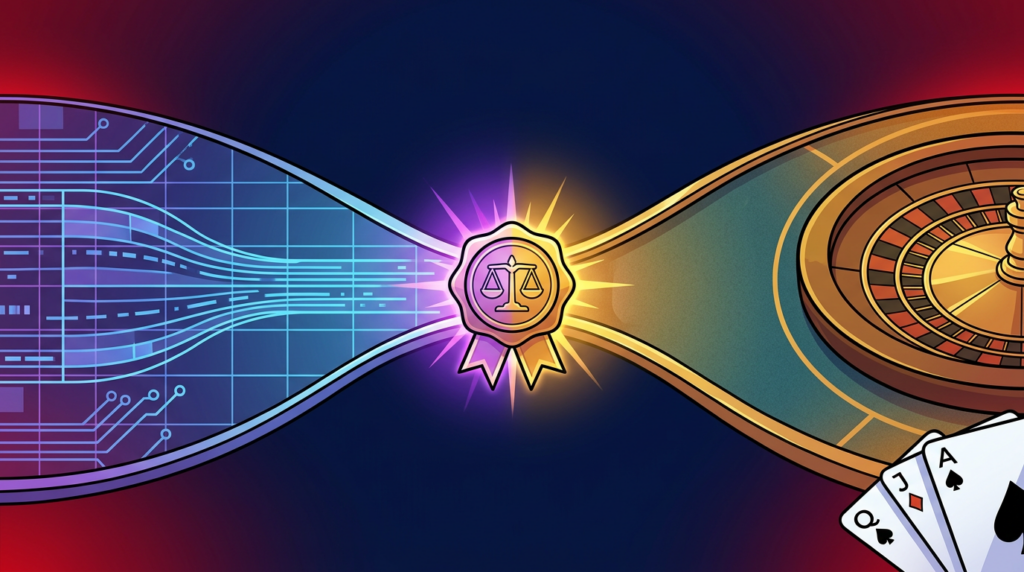
This is where the rubber meets the road. Which format is fairer? The answer, perhaps surprisingly, isn’t as clear-cut as many players might assume.
RNG Fairness: Scientifically Sound
From a purely mathematical and statistical standpoint, a properly certified and regulated RNG is absolutely fair. The outcomes are genuinely random, independent, and unpredictable. The house edge, which is the casino’s built-in advantage, is consistent and transparent, reflected in the game’s stated Return to Player (RTP) percentage. When you play a slot with a 96% RTP, over millions of spins, it will pay back 96% of the money wagered. Short-term results can vary wildly, but the long-term probabilities are fixed.
The perception of unfairness often arises from human psychology. We tend to look for patterns where none exist, and we remember losses more vividly than wins. A long losing streak isn’t evidence of a rigged RNG; it’s simply a natural, albeit frustrating, manifestation of true randomness. The RNG doesn’t care if you’ve been losing; it just generates the next number based on its algorithm. For players who prefer this format, many online casinos offer RNG slots with free spins - En free spins as part of their promotional packages.
Live Dealer Fairness: Visually Assuring
Live Dealer games offer a different kind of assurance: visual transparency. Seeing the dealer shuffle, deal, or spin the wheel provides an immediate, tangible sense of fairness. It replicates the trust mechanism of a traditional casino. For many, this visual proof is more comforting than a certification document for an algorithm they can’t see.
However, it’s important to remember that even physical games aren’t immune to potential issues. While highly regulated studios go to extreme lengths to prevent it, human error or even deliberate manipulation (though exceedingly rare and quickly detected in a live, monitored environment) are theoretically possible with physical equipment. This is why strict studio protocols, multiple camera angles, and constant supervision are paramount. The fairness here is not just about the randomness of the equipment, but also the integrity of the human element and the operational procedures. Live dealer enthusiasts might want to look for reload for live casino sessions - En reload bonuses to maintain their bankroll over multiple gaming sessions.
The Common Ground: Regulation and RTP
Regardless of whether you choose an RNG or Live Dealer table, the most significant factor in ensuring fairness isn’t the game type itself, but the reputation and licensing of the online casino provider.
Both RNG and Live Dealer games, when offered by licensed and regulated operators, are subject to stringent fairness checks. These operators are legally obligated to ensure their games are fair, their RTPs are accurate, and their systems are secure. This includes regular audits, adherence to strict operational standards, and often, independent testing of both their RNGs and live studio procedures.
Moreover, the Return to Player (RTP) percentage, which indicates the theoretical percentage of wagered money a game will pay back to players over time, is set by the game’s rules, not by whether it’s RNG or live. A blackjack game, whether RNG or live, will have a similar RTP if played with the same rules. The house edge remains constant across delivery methods.
For players who enjoy live dealer games but want to mitigate risk, some casinos offer cashback on live dealer losses - En cashback offers, providing a safety net that can make those inevitable losing sessions less painful.
Factors Influencing Your Choice Beyond Fairness
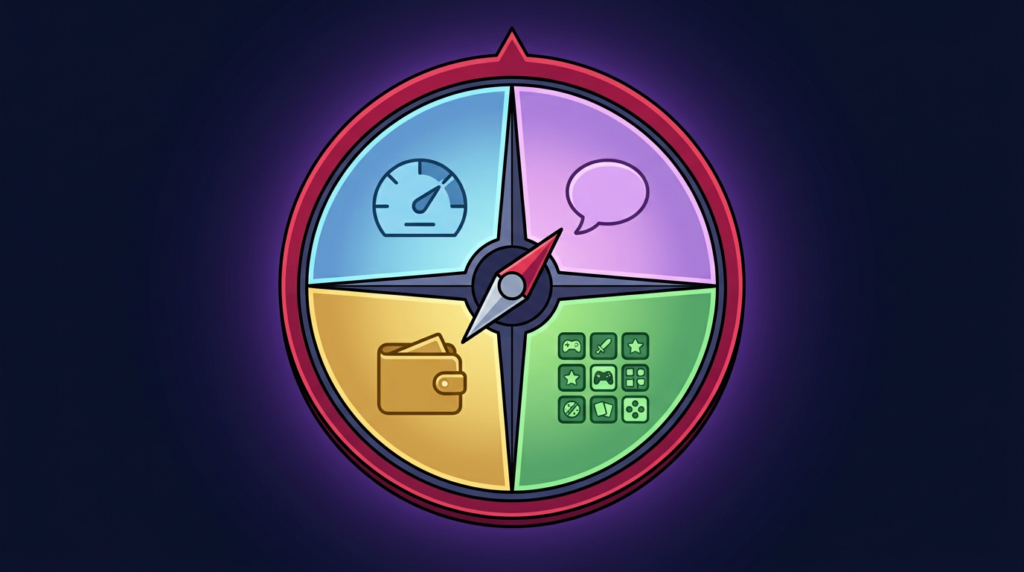
While fairness is crucial, your choice between RNG and Live Dealer might ultimately come down to personal preference and what kind of gaming experience you’re seeking.
- Pacing and Control: Do you prefer a rapid-fire game where you control the pace, making decisions quickly without external pressure? RNG is likely your preference. If you enjoy a more leisurely pace, savoring each moment, and don’t mind waiting for others or for physical actions to complete, Live Dealer offers that.
- Social Interaction: Do you enjoy the camaraderie of a casino floor, even if it’s virtual? The chat functions and human interaction of Live Dealer games can be a big draw. If you prefer solitude and focus solely on the game, RNG allows for that undisturbed play.
- Stakes and Budget: If you’re playing with a smaller bankroll or simply prefer to keep your bets low, RNG games often provide a wider range of lower minimum bets. Live Dealer tables, with their higher operational costs, typically have higher minimums.
- Game Variety: While Live Dealer lobbies are growing, RNG games still offer an unparalleled diversity of slots, video poker, and niche table game variations that might not be available in a live format.
Dispelling Myths and Misconceptions

Let’s quickly address some common beliefs:
- “RNGs are rigged when I’m winning too much, or when I switch games.” No. A certified RNG doesn’t “know” if you’re winning or losing, or if you’ve switched games. It simply generates random numbers. Your winning or losing streaks are statistically normal occurrences.
- “Live dealers can manipulate the game.” In a properly regulated and monitored Live Dealer studio, this is highly improbable. With multiple cameras, pit bosses, and strict protocols, any attempt at manipulation would be immediately flagged.
- “I have better luck on one type over the other.” This is often confirmation bias. You might remember the times you won big on a live table and attribute it to the format, overlooking your losses. True randomness, whether digital or physical, doesn’t favor one player or one format.
Choosing Your Table Wisely

So, which is fairer? The straightforward answer is this: both Live Dealer and RNG tables are fair, provided you are playing at a reputable, licensed, and regulated online casino.
The perceived fairness, however, is often subjective. For those who need to see the physical action to feel secure, Live Dealer games offer that visual comfort. For those who trust in the rigorous mathematical proofs and independent certifications, RNG games stand as equally fair options.
The ultimate choice boils down to your personal preference for the gaming experience: Do you value speed and variety, or immersion and social interaction? Do you prefer the digital efficiency of an algorithm or the tangible presence of a human dealer?
Before you sit down at any virtual table, always prioritize playing with operators that openly display their licensing information and boast certifications from independent testing agencies. This due diligence is your strongest assurance of a fair and enjoyable gaming experience, regardless of whether you choose the digital heart or the human pulse of online casino play.