
European vs. American Roulette: That Double Zero Matters
Let’s talk roulette. If you’ve spent any time around casino tables, whether in the glittering palaces of Las Vegas or the elegant rooms of Monte Carlo (or perhaps, more likely these days, a digital equivalent on your screen), you’ve probably encountered the iconic spinning wheel. It’s a game of chance, pure and simple, yet it holds a timeless allure. The anticipation as the ball dances from pocket to pocket, the thrill of a winning number, the quiet disappointment when it lands just one slot away. It’s captivating.
But here’s a little secret, or perhaps not so secret if you’re a seasoned player: not all roulette wheels are created equal. In fact, there’s a fundamental difference between what you’ll typically find across the Atlantic, in the United States, and what’s standard in Europe and most of the rest of the world. It boils down to one tiny, seemingly insignificant detail: an extra green pocket. And believe me, that one extra pocket changes everything.
As an old hand in this industry, I’ve seen countless players blissfully unaware of this distinction, often playing at a disadvantage without even realizing it. My aim today is to shed light on this critical difference, explaining why the presence (or absence) of that double zero isn’t just a minor variation, but a pivotal factor in your chances at the table.
The Wheels Themselves: A Tale of Two Layouts
Let’s start with the most obvious point of comparison: the physical wheel and its layout.
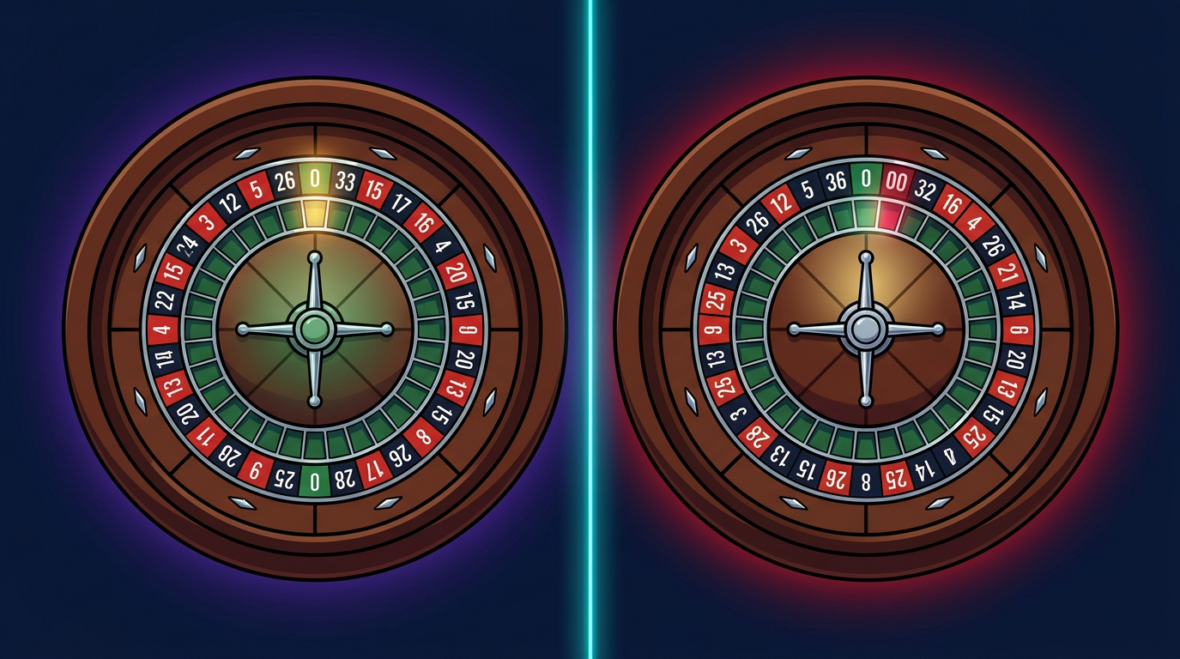
The European Wheel: The Original Standard

Imagine a roulette wheel. What do you see? A beautiful, perfectly balanced contraption with numbered pockets, alternating in red and black, and usually one green pocket for the zero. This, my friends, is the European Roulette wheel.
It features 37 pockets in total:
- Numbers 1 through 36, split evenly between red and black.
- A single green pocket marked “0” (zero).
The numbers on the European wheel are arranged in a specific, non-sequential order, designed to distribute high/low, odd/even, and red/black numbers as evenly as possible around the wheel. This arrangement is a testament to careful engineering, aiming for maximum randomness and balance.
The American Wheel: An Added Twist
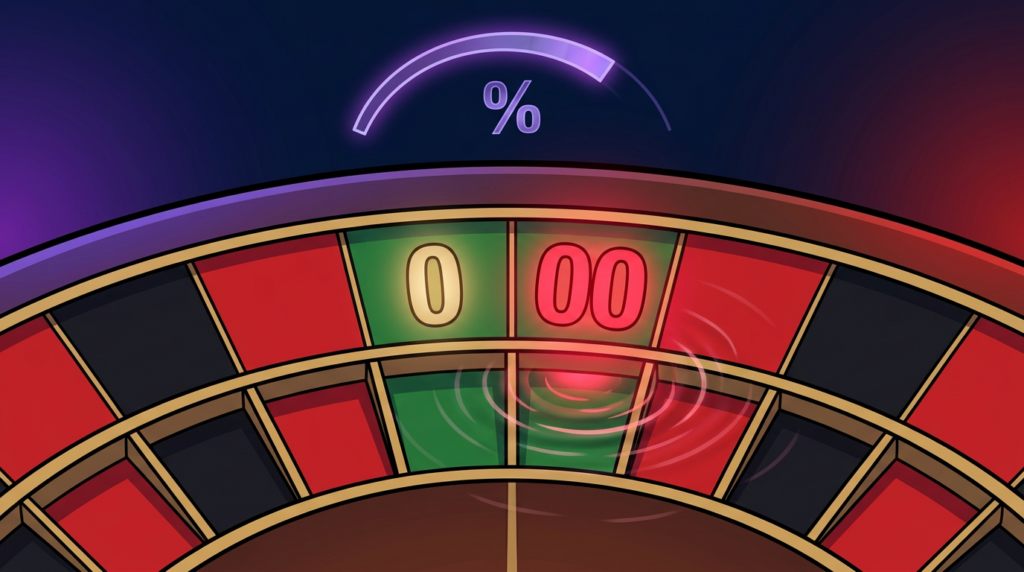
Now, picture that wheel again. But this time, imagine it with two green pockets. This is the American Roulette wheel.
It boasts 38 pockets:
- Numbers 1 through 36, again, evenly split between red and black.
- A green pocket marked “0” (zero).
- Another green pocket marked “00” (double zero).
Just like its European cousin, the numbers on the American wheel are also arranged in a specific sequence, but it’s a different one, tailored to accommodate that extra double-zero slot. The inclusion of the “00” pocket is the single most significant differentiator between the two game types, and its impact is profound.
The Crucial Impact: Understanding the House Edge
This is where the rubber meets the road, or rather, where the ball meets the pocket. The house edge is the casino’s built-in advantage, the mathematical reason why, over time, the house always comes out ahead. It’s not about cheating; it’s about probability. And that extra double zero pocket dramatically alters these probabilities.
Let’s break it down with some simple math.
European Roulette’s Edge
In European Roulette, you have 37 possible outcomes for where the ball might land (1-36 plus the single 0).
If you place a straight-up bet on a single number, you’re betting that one specific pocket out of 37 will win. The payout for a straight-up bet is typically 35 to 1.
Let’s do a quick calculation:
If you bet $1 on each of the 37 numbers, you’d spend $37.
If your number hits, you win $35 (plus your original $1 back, totaling $36).
So, for every $37 wagered, the casino expects to keep $1.
The house edge is calculated as (Net Loss / Total Wagered):
($1 / $37) ≈ 0.0270, or 2.70%.
This is generally considered one of the more player-friendly house edges among casino games, especially for a game of pure chance.
American Roulette’s Edge
Now, let’s look at American Roulette. Here, you have 38 possible outcomes (1-36, plus 0, plus 00).
If you place that same straight-up bet on a single number, you’re betting on one specific pocket out of 38. The payout, crucially, remains 35 to 1.
Let’s apply the same logic:
If you bet $1 on each of the 38 numbers, you’d spend $38.
If your number hits, you still win $35 (plus your original $1 back, totaling $36).
So, for every $38 wagered, the casino expects to keep $2.
The house edge calculation:
($2 / $38) ≈ 0.0526, or 5.26%.
See the difference? That single extra “00” pocket effectively doubles the house’s advantage compared to European Roulette. You’re still getting the same payout for your winning bet, but the odds of hitting that win have decreased because there’s one more losing pocket on the wheel. This is the core reason why, as a player, you should always prefer European Roulette.
Betting Structures: A Few Nuances
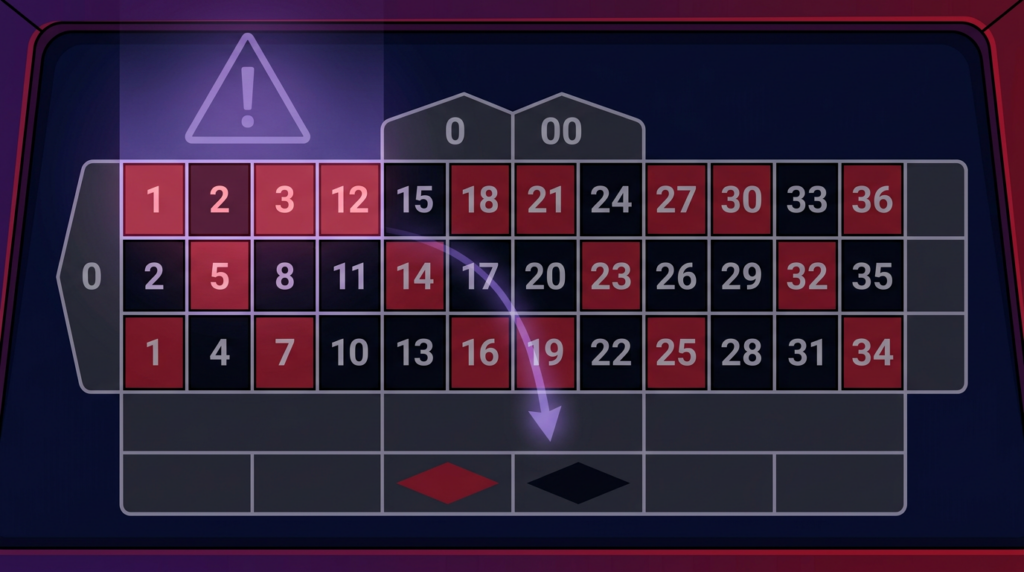
While the fundamental betting options (inside bets like straight-up, split, street, corner, line, and outside bets like red/black, odd/even, high/low, dozens, columns) are largely the same across both versions, there are a couple of points worth highlighting.
The “Basket Bet” (American Roulette Only)
American Roulette introduces one unique bet, often called the “basket bet” or “top line bet.” This wager covers the 0, 00, 1, 2, and 3. It pays 6 to 1.
Let’s quickly calculate its house edge:
You’re betting on 5 numbers out of 38.
If you bet $1 on each of the 38 numbers, you spend $38.
If your basket bet hits, you win $6 (plus your $1 back, totaling $7).
The expected loss on this specific bet is actually higher than the general American Roulette house edge. If you consider the true odds (5/38), the payout of 6/1 is even less favorable.
The house edge for the basket bet is approximately 7.89%, making it the worst bet on the American Roulette table. Avoid it.
Call Bets (European Roulette Often Features Them)
In European Roulette, particularly in land-based casinos, you’ll often encounter “call bets” or “announced bets.” These are specific wagers that cover sections of the wheel, based on the physical layout of the numbers. Common examples include:
- Voisins du Zéro (Neighbors of Zero): Covers 17 numbers that are closest to the zero pocket.
- Tiers du Cylindre (Third of the Wheel): Covers 12 numbers on the opposite side of the wheel from the zero.
- Orphelins (Orphans): Covers the remaining 8 numbers not included in Voisins or Tiers.
These bets are typically placed by calling them out to the dealer rather than placing chips on the main betting layout, and they involve multiple chips to cover the various numbers within the section. While you can place these bets on an American wheel by simply arranging your chips, they are fundamentally designed around the single-zero wheel’s unique number sequence and are far more prevalent (and strategically relevant) in European play.
Special Rules: A Player’s Best Friend
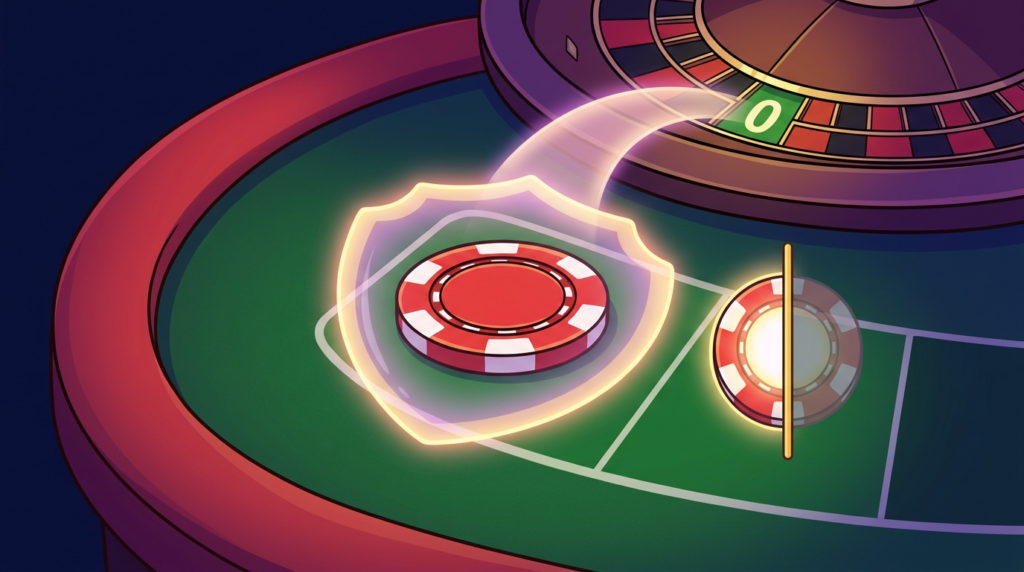
Beyond the wheel itself, some European Roulette tables offer special rules that further reduce the house edge, especially on even-money bets (red/black, odd/even, high/low). These rules are rarely, if ever, found in American Roulette.
La Partage
“La Partage” (meaning “the sharing”) is a rule where, if the ball lands on zero (0) and you’ve placed an even-money bet, you get half of your bet back. You don’t lose the entire wager; you share it with the house.
En Prison
“En Prison” (meaning “in prison”) is similar to La Partage but offers a slightly different mechanic. If the ball lands on zero (0) and you have an even-money bet, your bet isn’t immediately split. Instead, it’s “imprisoned” for the next spin. If your bet wins on the next spin, you get your original stake back (no winnings, just your money returned). If it loses, you forfeit the entire bet. If zero hits again, some casinos might keep it “en prison” for another spin, while others might consider it a loss.
The Impact of These Rules
When either La Partage or En Prison is in effect, the house edge on even-money bets in European Roulette is effectively halved. It drops from 2.70% down to approximately 1.35%. This is a significant improvement for the player and makes European Roulette with these rules one of the most favorable casino games you can play.
These rules are a testament to the game’s origins and a nod to player fairness, a concept that sometimes feels a little lost in the pursuit of higher profits.
Player Experience and Strategic Considerations
Given everything we’ve discussed, the choice seems clear, doesn’t it?
Why European Roulette is Preferable
From a purely mathematical standpoint, European Roulette is unequivocally the better game for the player. The lower house edge means that, over the long run, you will lose less money playing European Roulette compared to American Roulette. It’s as simple as that. If you’re playing for entertainment, minimizing your losses means your bankroll lasts longer, extending your playtime and enjoyment. If you’re a serious player, every fraction of a percentage point in house edge matters.
Does the Double Zero Change Strategy?
For standard bets, the strategy doesn’t fundamentally change. You still pick numbers, sections, or even-money outcomes. However, the probability of those outcomes shifts.
For instance, your odds of hitting a specific number are 1 in 37 in European Roulette, but 1 in 38 in American Roulette. Your odds of hitting red are 18 in 37 (European) versus 18 in 38 (American). While these differences might seem small on a single spin, they compound over hundreds or thousands of spins.
The psychological aspect is also interesting. Some players might perceive the American wheel as offering “more chances” because there are more pockets, but this is a misunderstanding. The extra pocket only serves to increase the house’s advantage, not the player’s.
A Glimpse into History
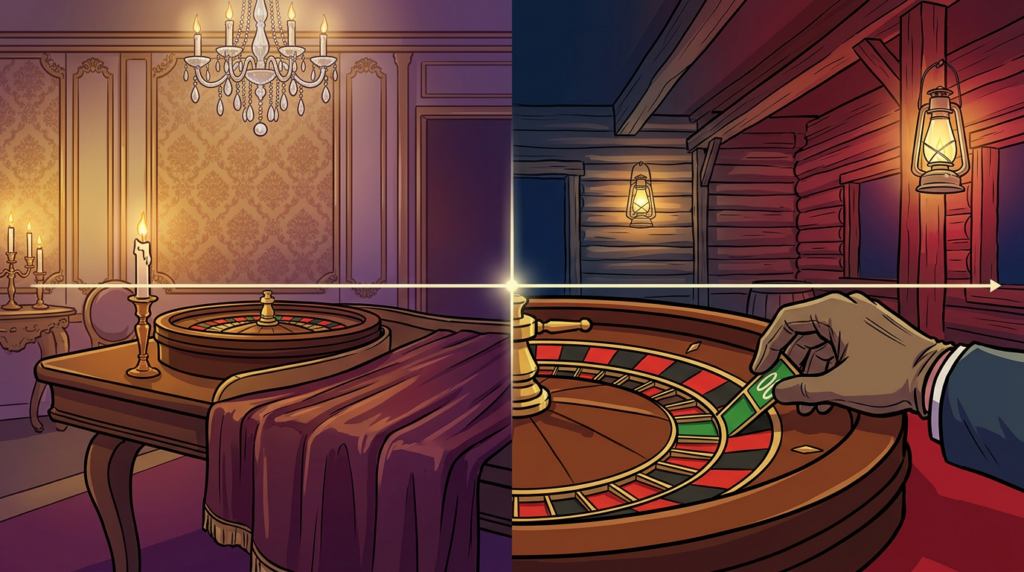
The origins of roulette can be traced back to 17th-century France, with mathematician Blaise Pascal’s pursuit of a perpetual motion machine. The game as we know it today, with a single zero, emerged in the late 18th century.
When roulette made its way to the United States in the 19th century, particularly in the burgeoning gambling dens of the American West, casino operators quickly realized that the single-zero wheel didn’t offer a high enough profit margin for their liking. To increase their advantage, they added the “00” pocket. This change was swiftly adopted and became the standard for American casinos, ensuring a healthier bottom line for the proprietors. The European variant, meanwhile, largely retained its single-zero tradition.
Where to Find Them Today
In the modern era, you’ll generally find:
- American Roulette: Predominantly in land-based casinos across the United States, Canada, and parts of the Caribbean. You’ll also find it offered by many online casinos catering to these markets.
- European Roulette: Standard in most European, Asian, and South American casinos. Crucially, it’s also the most common (and recommended) version found at virtually all reputable online casinos worldwide.
When you’re playing online, you almost always have the luxury of choice. Reputable online casinos will typically offer both versions, but a quick glance at the game title or rules will confirm if it’s “European Roulette” or “American Roulette.” Always take that extra second to check. Sometimes, you might even find French Roulette, which is essentially European Roulette but often includes the La Partage and En Prison rules, making it even more advantageous for players.
For roulette enthusiasts looking to maximize their overall value, some casinos offer cashback on roulette sessions - En cashback offers, which can help offset losses over time and make the already favorable European Roulette odds even more attractive.
Making Your Choice: The Bottom Line
So, what’s the takeaway from all this? It’s quite simple, really.
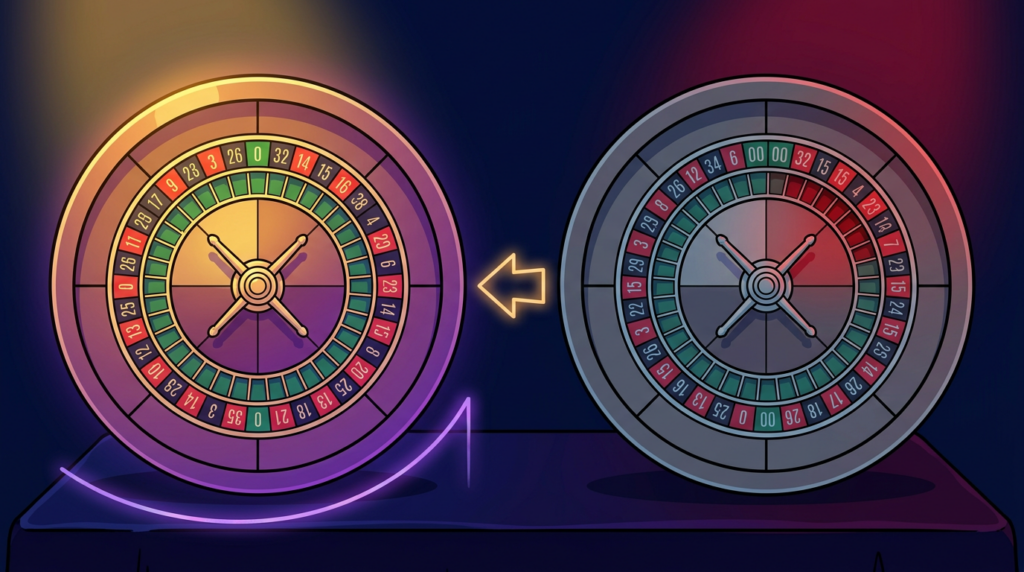
If you have the option, always choose European Roulette. Whether you’re in a brick-and-mortar casino or playing from the comfort of your home, the version with the single zero offers significantly better odds for the player. The house edge is nearly half that of its American counterpart, and if you can find a table with La Partage or En Prison rules, your advantage on even-money bets becomes even stronger.
The thrill of the spin, the beauty of the game, and the pure chance of it all remain unchanged. But by understanding the subtle yet profound difference that double zero makes, you can make a more informed choice and give yourself a better shot at walking away with a smile (and perhaps a little more in your pocket). It’s not about guaranteed wins, because roulette is, after all, a game of chance. It’s about playing smart and giving yourself the best possible odds within the game’s framework.
While roulette offers a unique thrill, some players compare it to other forms of casino entertainment. For example, slots free spins vs roulette - En free spins is a common consideration, as slots often provide more bonus features and promotional value, while roulette offers a purer, more strategic form of chance. Understanding your personal preferences will help you choose the right game for your playing style.
For dedicated roulette players who want to maintain their bankroll over multiple sessions, seeking out a reload bonus for roulette - En reload bonuses can provide additional value on subsequent deposits, helping to extend your playtime and enjoyment at the tables. Play wisely, my friends.