
A Short History of the Slot Machine: From the Liberty Bell to Today’s Video Slots
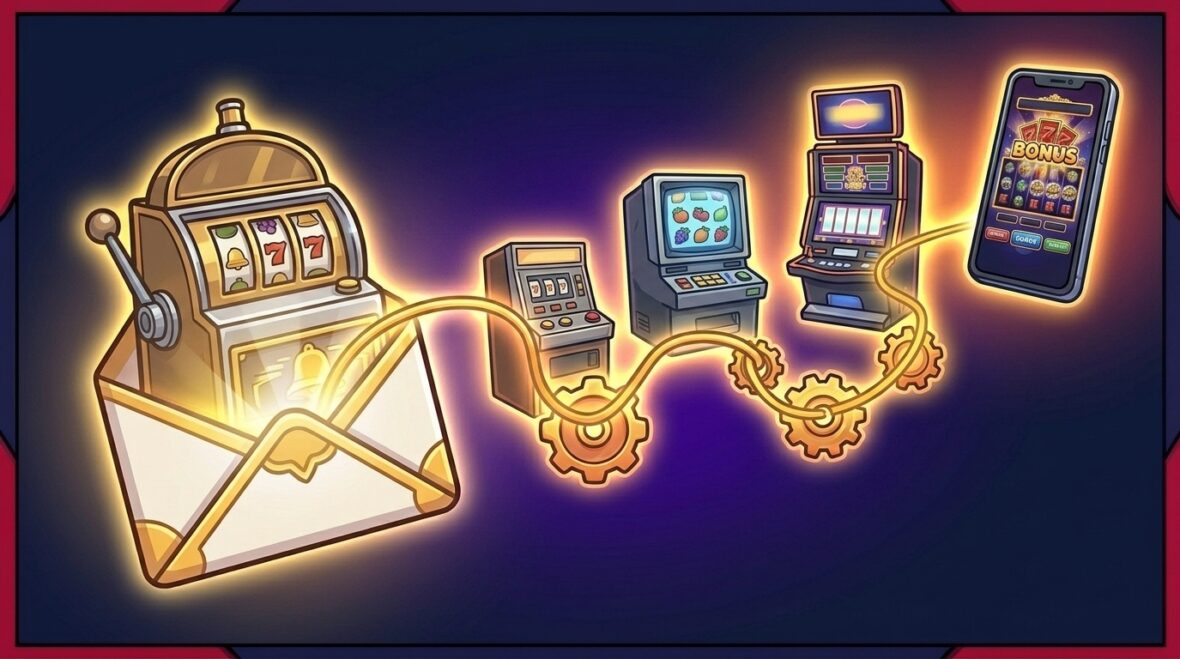
I got curious about where slot machines actually came from after a friend asked me why they’re called “one-armed bandits,” and I realized I couldn’t give a decent answer. Digging into it turned into a genuine rabbit hole that changed how I look at every modern release I play now, including whatever’s currently sitting on the new slot promotions - En new slot promotions page. I want to walk through what I found, since it’s given me a completely different appreciation for the mechanics I take for granted today.
The Liberty Bell and the First Slot Machine
Charles Fey, a mechanic working in San Francisco, built what’s widely credited as the first true slot machine in 1895, called the Liberty Bell. It used three spinning reels with five symbols each, including horseshoes, diamonds, spades, hearts, and a cracked liberty bell. Landing three bells in a row paid out the top prize, and that basic three-reel structure stuck around for the better part of a century.
Fey couldn’t get a patent on his design, which meant other manufacturers copied it almost immediately once it proved popular in bars and saloons. That lack of protection actually helped spread the format faster than a patent might have, since competitors iterated on his mechanics without needing a license. I find it a little ironic that the industry’s foundational machine was built on a design nobody could legally lock down.
Why Fruit Symbols Became Standard
Early machines paid out in coins, but gambling laws in several states pushed manufacturers to disguise payouts as candy or gum prizes instead. That’s where fruit symbols came from, since companies like the Bell-Fruit Gum Company used cherries, lemons, and oranges to represent different flavors of gum a player might win. The symbols stuck around long after the gum prizes disappeared, which is why fruit icons still show up on plenty of modern slots as a nod to that history.
The bar symbol, still common today, actually originated as the Bell-Fruit Gum Company’s stylized logo printed on the reels. I never would have guessed that a symbol I’ve seen on hundreds of machines started as a chewing gum company’s branding. Knowing that context has made me notice these legacy symbols differently whenever a classic-style slot uses them now.
Electromechanical Machines and the Rise of Bigger Jackpots
The next major shift came in the 1960s with electromechanical machines, which used electrical components alongside the mechanical reels to enable more complex payout structures. Bally’s Money Honey, released in 1963, is generally credited as the first fully electromechanical slot, and it could pay out up to five hundred coins automatically without an attendant needing to hand-pay large wins. That automation was a genuinely big deal, since it meant machines could offer larger jackpots without requiring constant staff intervention.
These machines also introduced the bottomless hopper, allowing for much larger automatic payouts than the coin trays on purely mechanical machines could handle. Players noticed the bigger prizes, and the machines became significantly more popular as a result. This era set the stage for the shift toward video-based systems that would follow over the next couple of decades.
Video Slots Take Over
The first true video slot machine appeared in 1976, developed by a company called Fortune Coin, using a modified Sony television for the display instead of physical spinning reels. It took a while to catch on, since early players were skeptical of a screen replacing tangible mechanical reels they could see spinning. Once the technology proved reliable, video slots opened up design possibilities that mechanical reels simply couldn’t match.
Suddenly, developers weren’t limited to three or five physical reels with a fixed number of symbols. They could build bonus rounds, animated sequences, and eventually the wild, scatter, and multiplier mechanics that define modern slots. That same trajectory of expanding creative possibility is still playing out today, just with far more processing power behind it than Fortune Coin’s engineers ever had access to.
The Random Number Generator Era
Video slots also introduced the random number generator, a piece of software that determines outcomes independently of anything resembling physical reel weighting. This was a genuine shift in how fairness worked behind the scenes, since older mechanical and electromechanical machines relied on physical reel strip configurations that could be adjusted more visibly by operators. RNG systems, properly certified, made outcomes provably random on every single spin regardless of previous results.
Understanding this history changed how I think about modern fairness certifications, since the entire concept only became necessary once games moved to software-driven outcomes. Mechanical machines had their own physical limitations built into the reel strips themselves, which functioned as a different, more visible kind of constraint. Neither era is inherently more trustworthy, but the way trust gets established is completely different between them.
Progressive Jackpots Enter the Picture
The first linked progressive jackpot system, IGT’s Megabucks, launched in 1986, connecting multiple machines across different casinos into a single, growing jackpot pool. This was a major structural innovation, since it meant a single spin on a relatively modest machine could suddenly be worth millions of dollars. The first Megabucks jackpot paid out over four million dollars just a few years after launch, which was an almost unthinkable sum for a slot machine win at the time.
That networked jackpot concept is the direct ancestor of the progressive jackpot slots still running today, just scaled up with online connectivity instead of physical machine networks. The core idea, though, a small piece of every wager across many machines building toward one enormous prize, hasn’t fundamentally changed since Megabucks first proved the concept worked. It’s one of the clearest throughlines from that era to what I play now.
The Move Online
The mid-1990s brought the first online casinos, and slot machines followed quickly once secure payment processing became viable over the internet. Early online slots were fairly crude compared to what land-based video slots were already offering, mostly simple three-reel games mimicking the classic mechanical format. It took a few years for online slot design to catch up to and eventually surpass what physical machines could offer.
Once it did, the pace of innovation accelerated dramatically, since developers were no longer constrained by the physical footprint or hardware limitations of a cabinet sitting on a casino floor. Online studios could push out new titles constantly, experiment with mechanics that would have been impractical to manufacture physically, and iterate based on player data in ways land-based machines never could. That shift is really the direct precursor to the release pace we see from studios today.
Mobile Play and the Modern Era
Smartphones changed the slot industry again starting around 2010, as studios rebuilt their games to work seamlessly on touchscreens rather than requiring a desktop browser. This pushed a wave of design changes toward simpler, more visually punchy interfaces optimized for smaller screens and shorter attention spans. Session length patterns shifted too, since mobile play tends to happen in shorter, more frequent bursts than a dedicated desktop session.
Modern mechanics like cascading reels, cluster pays, and Megaways-style dynamic reel configurations all emerged during this mobile-first era, building on the video slot foundation established decades earlier. Each of these represents a genuine mechanical evolution beyond the original three-reel, single-payline format Fey introduced back in 1895. Tracing the line from that Liberty Bell machine to a modern Megaways title makes the pace of change over just a bit more than a century pretty remarkable to think about.
What This History Changed About How I Play
Knowing this background has made me appreciate design choices in modern slots that I used to take for granted, like why fruit symbols still show up constantly or why the RNG matters as much as it does. It’s also made me more patient with older-feeling mechanics on classic-style games, since I understand they’re deliberately referencing over a century of design history rather than just being outdated. That context has genuinely made playing more enjoyable for me, beyond just the mechanics of winning or losing on any given spin.
When I’m comparing where to play these days, I check the game libraries on offer, since the operators carrying the widest range of both classic-style and cutting-edge titles tend to be the ones actually investing in this history rather than just recycling the same handful of generic templates. That’s become one of my quieter criteria for judging whether a site is worth spending time on. A hundred and thirty years of mechanical and digital innovation is a lot to draw from, and the best modern libraries make that history genuinely visible in their catalog.
What Stayed the Same
What strikes me most, having read through all this, is how little the core appeal has actually changed since 1895. A player pulls a lever or taps a button, symbols land in some combination, and a payout either follows or it doesn’t. Every technological leap I’ve described, electromechanical components, video screens, random number generators, mobile touchscreens, has been in service of that same basic loop rather than replacing it with something fundamentally different.
That continuity is part of why I think classic-style three-reel slots still have an audience today, even alongside titles with a hundred thousand ways to win and elaborate bonus features. There’s something genuinely satisfying about the stripped-down version of the format that Fey introduced, stylized reels and all. I find myself returning to a simple three-reel title every so often specifically because it feels closer to that original mechanical loop than the more elaborate modern releases do.
Museums and Preserved Machines
I ended up visiting a small gaming history exhibit during a trip a while back, and seeing an actual restored Liberty Bell machine in person made this history click in a way reading about it hadn’t. The mechanical clicking of the reels, the physical weight of the lever, and the surprisingly small size of the cabinet compared to modern machines all stuck with me. If you ever get the chance to see one of these early machines in person, I’d genuinely recommend it, even as someone who plays almost exclusively online now.
A handful of gaming museums around the world, mostly in Nevada and a few scattered across Europe, maintain working collections spanning from these early mechanical machines through the electromechanical and early video eras. Seeing the physical progression laid out side by side made the pace of change feel more concrete than any timeline I’d read online. It’s a strange, genuinely grounding feeling to trace a direct mechanical lineage from a wooden cabinet built in 1895 all the way to whatever new title is currently featured on a current list of casino bonuses - En top casinos en today.