

What Actually Determines How Fast a Casino Pays You Out

My first big win took eleven days to actually land in my bank account, and I spent most of that stretch refreshing my email like it might speed things up. Since then I’ve had withdrawals clear in under an hour and others drag on for over a week, sometimes from the same casino depending on the method I used. That inconsistency bugged me enough that I started paying closer attention to what actually drives the difference.
The short answer is that payout speed isn’t one thing, it’s a chain of several separate steps, and any one of them can be the bottleneck depending on the situation. Understanding that chain has done more for my patience than anything else, mostly because I now know which delays are normal and which ones are worth actually questioning.
Verification Is Usually the First Bottleneck
Identity verification is where most of my early delays actually happened, not the payment processing itself. Casinos are required to confirm who you are before releasing funds past a certain threshold, and if you haven’t uploaded ID documents before requesting your first withdrawal, that verification step adds days you could’ve avoided. I learned to submit verification documents the same week I sign up now, long before I have any intention of withdrawing.
That single habit change cut more time off my average payout than switching payment methods ever did. A casino that says withdrawals take three to five business days is often quoting a number that includes verification time for players who haven’t done it in advance. Once verification is already on file, that same casino frequently pays out closer to the low end of its stated range, sometimes faster.
What Documents Actually Get Requested
Most verification requests ask for a government ID, a recent proof of address, and sometimes a screenshot or statement showing the payment method you used to deposit. I keep digital copies of all three ready to go, since scrambling to find a recent utility bill at withdrawal time is exactly the kind of unnecessary delay I’m trying to avoid. It sounds like a small thing, but having documents ready before you need them removes an entire category of avoidable waiting.
Internal Review Thresholds
Larger withdrawals often trigger a manual review that smaller ones skip entirely, and this threshold varies a lot between casinos without always being stated clearly upfront. I’ve had a five hundred dollar withdrawal clear almost instantly while a much larger one from the same casino sat in manual review for two extra days. That’s not the casino being difficult, it’s usually a fraud and compliance check that scales with the size of the payout.
I’ve started splitting unusually large withdrawals into two smaller requests when a casino allows it, partly to test whether that avoids triggering the manual review threshold. It doesn’t always work, and some casinos batch requests from the same player regardless of how they’re split. But often enough it’s shaved a day or two off the total wait that it’s become a habit worth trying first.
Payment Method Actually Matters A Lot
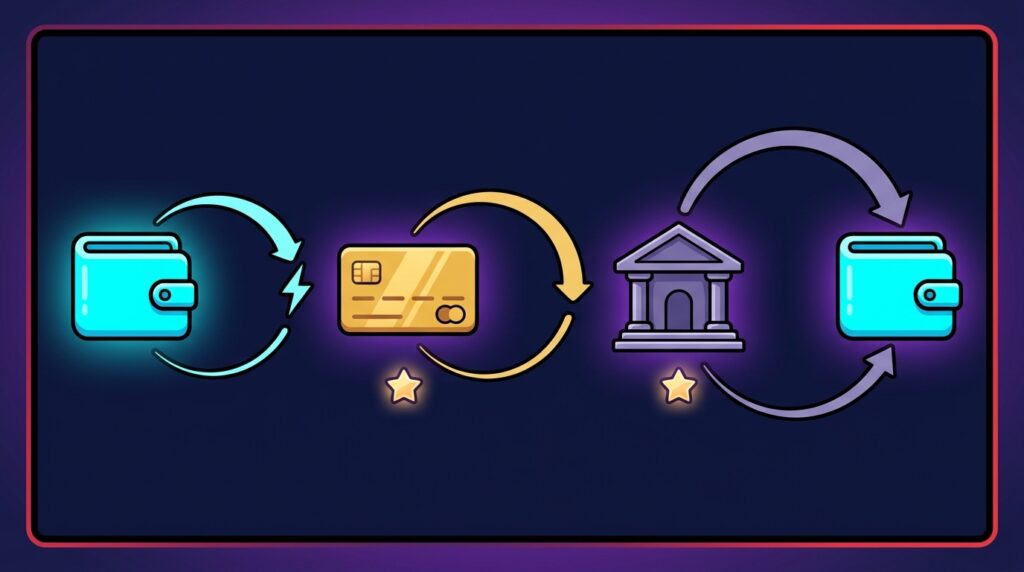
Once a withdrawal clears internal review, the payment method you’re using becomes the dominant factor in how fast money actually reaches you. E-wallets tend to be the fastest option in my experience, often landing within hours of approval rather than days. Bank transfers and card withdrawals both tend to run slower, sometimes adding three to five business days purely because of how those banking rails process transactions.
I check what’s listed on payment method bonuses - En payment method bonuses pages now before picking how I’ll fund and withdraw from a new casino, since the method that earns the best deposit terms isn’t always the one that pays out fastest. There’s sometimes a real tradeoff between a method with a better bonus attached and a method that clears withdrawals quicker. I’ve started weighing that tradeoff deliberately instead of defaulting to whichever method I used for the deposit.
Why Crypto Withdrawals Vary So Much
Crypto withdrawals get talked about as universally fast, and in my experience that’s true for the blockchain transaction itself but not always true for the casino’s internal processing before that transaction gets sent. Some casinos process crypto withdrawals near-instantly once approved, while others hold crypto requests in the same review queue as everything else and only the final transfer itself is quick. I’ve stopped assuming crypto automatically means fast and started checking each casino’s actual track record instead.
Bonus Terms Can Freeze a Withdrawal Entirely
An active bonus with unfinished wagering requirements will stop a withdrawal from processing at all, regardless of how fast the casino’s payment rails normally are. I’ve requested a withdrawal before realizing a small leftover bonus was still technically active, and the request simply sat there until I either finished the wagering or forfeited the remaining bonus funds. That’s not a payout delay in the usual sense, it’s a rule I hadn’t accounted for.
I check their casino bonuses page - En casino bonuses and my own account status for any active offers before requesting a withdrawal now, specifically to confirm nothing is still tying up my balance. It takes thirty seconds and has saved me from the confusion of a withdrawal that looks stuck when it’s actually just waiting on wagering completion. That distinction matters, because one is a genuine processing delay and the other is entirely within my control to resolve first, and mixing the two up used to cost me a few unnecessarily anxious days waiting on nothing in particular.
Weekends and Time Zones Add Real Delay
A withdrawal requested on a Friday evening often doesn’t get looked at by a human reviewer until Monday, which is a delay that has nothing to do with the payment method or the casino’s general speed. I’ve timed withdrawal requests for early in the week specifically to avoid this, and it’s made a noticeable difference in how quickly larger payouts actually clear. It’s a simple adjustment that costs nothing and has consistently paid off.
Time zone mismatches compound this further when a casino’s support and compliance team operates somewhere far from where I’m playing. A review team based several hours behind me might not start processing my Tuesday morning request until what feels like my Tuesday evening. Once I noticed which casinos seemed to have this lag consistently, I adjusted my expectations for those specific operators rather than assuming something had gone wrong.
Pending Periods Aren’t Always What They Seem
Most casinos build in a pending period after you request a withdrawal, usually somewhere between a few hours and twenty-four hours, during which you can still cancel the request and keep playing with those funds. I used to see that pending window as pure friction designed to tempt players back into the game before their money leaves. Some of that suspicion is probably fair, but the window also gives the casino time to run automated checks before a human ever touches the request.
I’ve learned to just accept the pending period as a fixed cost rather than getting frustrated by it, since fighting it or trying to find a workaround hasn’t gotten me anywhere. What I do control is not touching the balance during that window, since restarting play resets the pending clock at most casinos I’ve used. That reset has caught me off guard more than once early on, and it’s a rule I now double check on any casino I haven’t used for a withdrawal before.
How Loyalty Status Sometimes Speeds Things Up
I’ve noticed my own withdrawals getting faster at casinos where I’ve built up meaningful loyalty status, which lines up with what’s often described on the casino rewards list - En casino rewards pages about priority processing for higher tiers. It’s not something every operator advertises loudly, but a few have mentioned expedited withdrawal processing as an actual VIP perk rather than just a marketing line. My own experience matching that claim, at least loosely, has made me more inclined to concentrate my play at fewer casinos rather than spreading it thin.
I don’t think loyalty status is a guaranteed fix for slow payouts, and I’ve still had delays at casinos where I hold decent status. But the pattern has been noticeable enough across multiple operators that I factor it into which casino I choose for larger sessions now, especially if I’m expecting a withdrawal that might trigger manual review.
Red Flags Versus Normal Delays
Learning to tell the difference between a normal delay and an actual problem took some trial and error. A withdrawal sitting in “pending” for the stated review window isn’t a red flag, it’s just the process working as described. A withdrawal that’s been “under review” well past the casino’s own stated maximum, with no update or response to support tickets, is where I start paying closer attention and documenting everything.
I keep screenshots of withdrawal requests and any support conversations now, mostly as a habit rather than because I expect trouble. It costs nothing to have that record, and on the rare occasion something has genuinely gone sideways, having a clear paper trail made resolving it faster than starting from scratch with support.
What I Check Before Playing Anywhere New

Before depositing at a new casino now, I look specifically for stated withdrawal timeframes by method, not just a general “fast payouts” claim on the homepage. Specific numbers, even if they turn out to be optimistic, tell me more about what to expect than vague marketing language ever does. I also check whether verification can be submitted before any deposit is made, since casinos that allow that tend to be the ones where my first withdrawal goes smoothly.
None of this makes payout speed fully predictable, since there’s still some variance tied to review volume and staffing on any given day. But understanding the actual chain of steps, verification, review thresholds, payment method, timing, and loyalty status, has turned what used to feel like a black box into something I can reason about and plan around.
Support Tickets Rarely Speed Things Up
I used to open a support ticket the moment a withdrawal took longer than I expected, assuming a polite nudge might move things along faster. In practice, most support agents can only tell you the request is “still processing” without any real ability to expedite it themselves, since withdrawal processing usually sits with a separate compliance or payments team. That realization saved me a lot of wasted energy typing out increasingly frustrated messages that weren’t accomplishing much.
I still open a ticket if a withdrawal genuinely exceeds the casino’s own stated maximum timeframe, since at that point documenting the delay matters even if it doesn’t speed anything up immediately. But I’ve stopped expecting a same-day resolution from a support chat, and adjusting that expectation removed a layer of frustration that wasn’t helping anything actually process faster.
Multiple Small Withdrawals Versus One Large One
I mentioned splitting large withdrawals to potentially dodge manual review thresholds, but there’s a tradeoff worth naming honestly. Multiple smaller withdrawal requests sometimes each carry their own processing fee, or count separately against a casino’s daily withdrawal limit, which can end up costing more in total than one larger request that takes an extra day or two to clear. I weigh that tradeoff based on how urgently I actually need the funds versus how much a bit of extra patience might save in fees.
For withdrawals I’m in no particular hurry to receive, I’ve started just requesting the full amount at once and accepting whatever review time comes with it. The splitting strategy is one I save specifically for situations where speed genuinely matters more than the small cost of potentially triggering extra processing fees. Treating it as a situational tool rather than a default habit has made the whole approach more useful.
What Changed Once I Stopped Expecting Instant Payouts
A big part of my early frustration with payout speed came from expecting something the industry mostly doesn’t deliver, near-instant withdrawals as a default rather than an exception. Once I recalibrated to expect a range measured in hours to a few days depending on method and casino, the whole experience got noticeably less stressful. I stopped refreshing my email every twenty minutes and started just checking once a day until the money showed up.
That shift in expectation didn’t make withdrawals actually process any faster, but it changed how much mental energy I spent waiting on them. Knowing the realistic range for a given payment method and casino combination means I’m rarely surprised anymore, and rarely surprised is a much more pleasant way to experience what used to feel like an anxious countdown every single time.
My Bottom Line
Payout speed comes down to a handful of concrete factors rather than luck or a casino’s general reputation, and most of the delay I used to blame on “the casino being slow” was actually verification I hadn’t completed in advance. Getting documents ready early, picking payment methods deliberately, and timing requests around weekends have collectively cut my average wait down significantly. It’s not glamorous advice, but it’s the difference between refreshing my email for eleven days and barely thinking about a withdrawal until it’s already there, quietly sitting in my account like it was never really in question at all.