

Why I Started Logging Every Slot Session

My spreadsheet habit started as a joke, something my partner teased me about after watching me open a blank sheet before what was supposed to be a casual Friday night session. Six months later, that joke has become the single most useful thing I’ve done to actually understand my own play. I wish I’d started years earlier instead of trusting my memory to keep an honest account.
Before logging sessions, I had a vague, mostly rosy picture of how I was doing overall. I remembered the big wins vividly and let most of the losing sessions blur together into a forgettable haze. That selective memory was quietly convincing me I was roughly breaking even, which turned out to be nowhere close to true once actual numbers were involved.
What I Actually Track
The log itself is simple: date, game, starting bankroll, ending bankroll, and a short note on anything unusual that happened. I don’t track spin-by-spin detail, since that level of granularity felt like it would turn a hobby into a chore, and I wanted something sustainable rather than technically perfect. Even that minimal setup revealed patterns I’d completely missed while trusting memory alone.
I also note whether a session was tied to a bonus, and specifically whether it involved cashback offers - En cashback offers I was working through at the time. That detail turned out to matter more than I expected, since bonus-driven sessions behave differently from sessions where I’m just playing with my own deposited funds.
The Note Field Matters More Than the Numbers

The short note field ended up being more valuable than the raw numbers themselves, oddly enough. Writing “tired, played longer than planned” or “chased a loss after a bad bonus round” next to a losing session created a pattern I could actually see once I scrolled back through a few months of entries. The numbers told me what happened, but the notes told me why, and why turned out to matter a lot more for actually changing behavior.
The First Pattern That Surprised Me
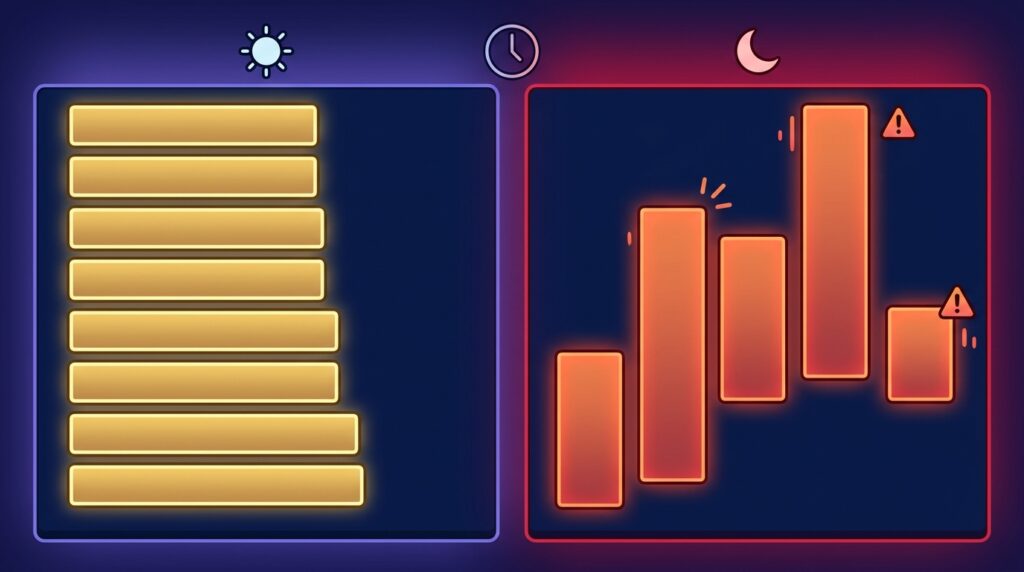
The first thing my log revealed was how much worse my results were on sessions that started after 11pm compared to earlier sessions on the same games. I’d always assumed variance was just variance, random enough that time of day shouldn’t matter, but three months of data said otherwise pretty clearly. Late sessions correlated with longer play times, bigger bets, and more entries with notes like “kept going past when I meant to stop.”
I don’t think there’s anything magical about the clock itself causing worse outcomes. It’s more likely that late-night sessions happen when I’m tired, less disciplined about limits, and more inclined to chase a bad stretch instead of walking away. Seeing that pattern laid out in actual numbers did more to change my late-night habits than any amount of general willpower ever managed.
Weekday Versus Weekend Differences
A smaller pattern showed up around weekday versus weekend sessions too, with weekday sessions running noticeably shorter and more disciplined on average. I suspect that’s simply because I have less unstructured time on a Tuesday evening, which forces a natural limit that weekends don’t impose. Knowing that about myself has made me more deliberate about weekend session planning specifically, since that’s where my discipline apparently needs the most help.
How Logging Changed My Bonus Decisions
Once I had real numbers on which games actually paid off for me over time, my approach to claiming bonuses shifted noticeably. I used to grab almost any offer that looked generous on paper, without much sense of whether the games it applied to had historically worked out for me personally. Now I check my own log before claiming anything, since my personal results on a given game matter more to my decision than a stated RTP figure I have no way of verifying myself.
That’s not to say my log overrides published math, since a handful of months of personal data is nowhere near enough to draw statistically solid conclusions about any single game’s true return rate. But it does tell me something about my own play style interacting with that game, which is a different and genuinely useful kind of information. A game with a great stated RTP that I consistently play poorly on, betting too erratically or chasing too often, isn’t actually a great choice for me specifically.
Seeing Loyalty Progress Clearly
Logging sessions also made it much easier to track how I’m actually progressing toward loyalty milestones, rather than vaguely hoping I’m getting closer. I cross-reference my session totals against whatever tier requirements are listed on the loyalty perks page - En loyalty program perks now, which turns an abstract goal into something concrete I can actually plan around. That clarity has made me more patient about grinding toward a tier rather than guessing at how close I am.
Before I started logging, I’d occasionally overestimate my progress and feel disappointed when a tier upgrade took longer than expected, or underestimate it and miss claiming a milestone bonus I’d actually already qualified for. Having real numbers removed that guesswork entirely, and removing guesswork turned out to reduce a surprising amount of low-level frustration I hadn’t fully noticed I was carrying around.
The Discomfort of Seeing the Real Total
I won’t pretend the process has been entirely pleasant, because tallying up six months of results in one column produced a number that was worse than I expected, even accounting for the fact that I knew going in the picture wouldn’t be rosy. There’s a specific kind of discomfort in seeing an honest total instead of the flattering, cherry-picked memory I’d been running on for years. That discomfort was uncomfortable enough that I almost stopped logging entirely rather than face it.
I’m glad I didn’t stop, because the discomfort turned out to be exactly the signal I needed to actually adjust my habits instead of continuing to assume things were roughly fine. A log that only ever confirmed what I wanted to believe wouldn’t have been worth keeping. The value came specifically from it occasionally telling me something I didn’t want to hear.
What I’d Tell Someone Starting a Log
If you’re thinking about starting your own session log, I’d say keep it minimal enough that you’ll actually maintain it past the first excited week. A spreadsheet with five columns that you update honestly every session beats an elaborate tracking system you abandon after a month out of sheer friction. The value comes from consistency over time, not from capturing every possible data point from day one.
I’d also say be prepared for the log to occasionally tell you something you don’t want to hear, because that’s usually where the actual useful information lives. A log that just confirms your existing sense of things isn’t doing much work. Mine has been most valuable exactly in the moments it contradicted what I assumed was true about my own play.
The Tools I Tried Before Settling On a Spreadsheet
I experimented with a couple of dedicated bankroll tracking apps before landing back on a plain spreadsheet, and the apps kept losing out for the same reason each time. They wanted more input than I was willing to give consistently, categorizing every session by game type, device, and time bracket before I’d even finished playing. A spreadsheet with five columns I control completely has none of that friction, and friction is the main thing that kills a tracking habit before it takes hold.
One app did have a nice visual dashboard that turned my numbers into charts automatically, which I’ll admit was satisfying to look at. But satisfying to look at isn’t the same as useful for changing behavior, and I found myself admiring the charts more than actually acting on what they showed. The plain spreadsheet forces me to look at raw numbers directly, which is less pretty but somehow more honest.
How Often I Actually Review It
I don’t review the log after every session, since that would probably turn a useful habit into an anxious one. Once a month, usually on a weekend morning with coffee, I scroll back through the previous four or five weeks and look for anything that stands out. That monthly rhythm feels sustainable in a way that daily or weekly review probably wouldn’t for me personally.
During that monthly review, I’m mainly looking for two things: sessions that broke my own stated rules, and any game or time pattern that’s repeating often enough to matter. The first category is usually the more uncomfortable one to reread, since it means admitting I ignored my own limits at some point in the past month. The second category is more clinical, closer to just reading a report about a stranger’s habits than reflecting on my own.
What I Do With What I Find
When the monthly review turns up something worth addressing, I try to make one specific, concrete adjustment rather than a vague resolution to “do better.” If late sessions keep showing up as problematic, the adjustment might be as simple as not opening any casino app after 10pm for the following month. Small, specific rules like that have stuck far better than broader intentions ever did for me.
Talking Myself Out of Quitting the Habit
There have been a few stretches where I considered dropping the log entirely, usually right after a review turned up something I didn’t enjoy seeing about my own play. The temptation to just stop looking is real, and I understand why plenty of people never start a habit like this in the first place. Ignorance about your own patterns is genuinely more comfortable in the short term, even though it’s worse for you over a longer stretch.
What’s kept me logging through those uncomfortable stretches is remembering how much clearer my decision-making got once I actually had real numbers to work from. The discomfort of an honest total is temporary and passes within a day or two. The confusion of not really knowing how I’m doing, which is where I lived for years before this, was a much quieter but more persistent kind of unease that I don’t want to go back to.
What Surprised My Partner When I Shared It
I eventually showed the log to my partner, half expecting an “I told you so” about the joke that started this whole habit. Instead the reaction was more surprise at how mundane most entries actually were, small, unremarkable sessions rather than the dramatic wins or disasters that stick in memory. That mundane middle, the bulk of ordinary sessions nobody remembers individually, turned out to be where most of the actual financial picture lived.
Seeing that reaction from someone outside my own head confirmed something I’d started to suspect on my own: memory is a terrible record-keeper precisely because it’s drawn to the extremes and forgets the average. A spreadsheet doesn’t care whether a session was memorable, it just records what happened. That indifference to drama is exactly what makes it more trustworthy than the story I would’ve told from memory alone.
My Bottom Line
Six months of honest logging changed more about how I play than any strategy article, and it did it just by making patterns visible that I’d been too close to notice on my own. I still don’t track every possible detail, and I don’t think that level of rigor is necessary for the log to be useful. What matters is that I now know roughly what’s actually happening instead of trusting a memory that was quietly editing itself in my favor the whole time, and that alone has been worth every slightly uncomfortable monthly review.