
Baccarat: Why High Rollers Love the Banker Bet

I. Introduction: The Game of the Elite
Step into the hushed, opulent world of a high-stakes casino, and you’ll often find a particular game drawing the most serious players, those who wager sums that would make most of us gasp. That game is Baccarat. It’s a game cloaked in an aura of sophistication, often associated with secret agents and exclusive VIP rooms, yet at its heart, Baccarat is remarkably simple. Despite this simplicity, it holds a profound appeal for those who play with the largest bankrolls, and a significant part of that appeal lies in one specific wager: the Banker bet.
As someone who has observed the casino industry for decades, from the bustling main floors to the most secluded private salons, I’ve seen countless trends come and go. But Baccarat, and the high roller’s unwavering preference for the Banker, remains a constant. It’s not about flashy strategies or complex card counting; it’s about understanding probabilities, managing risk, and making the most informed decision possible when significant capital is on the line.
II. The Enduring Allure of Baccarat
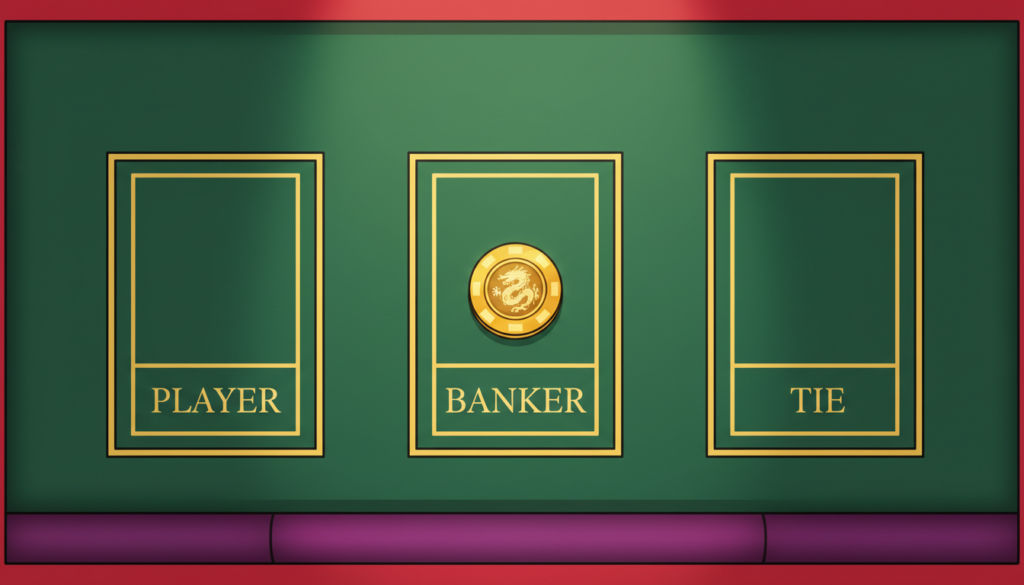
Before we dive deep into the Banker bet, let’s consider what makes Baccarat such a magnet for serious players. Unlike poker, which demands intricate psychological warfare, or blackjack, which requires perfect basic strategy and often advanced counting techniques, Baccarat’s core gameplay is straightforward. You bet on one of three outcomes: the Player hand wins, the Banker hand wins, or the hands tie. The dealer handles all the card drawing mechanics according to fixed rules.
This simplicity is a major draw. High rollers aren’t necessarily looking for a mental workout; they’re looking for a game where their capital can be put to work efficiently, with transparent odds and minimal opportunities for dealer error or strategic missteps on their part. The elegance of Baccarat lies in its speed, its low house edge, and the fact that the player’s only real decision is where to place their chips. It’s a game of pure chance, yes, but within that chance, there’s a clear statistical hierarchy that savvy players exploit.
III. Breaking Down the Core Bets

To appreciate the Banker bet, we first need to quickly recap the three main wagers available in Baccarat.
A. The Player Bet
When you bet on the Player hand, you’re essentially betting that the Player’s total will be closer to nine than the Banker’s total. If you win, you typically get paid even money (1:1). The house edge on the Player bet is approximately 1.24%. While certainly better than many other casino games, it’s not the absolute best Baccarat offers.
B. The Tie Bet
The Tie bet is exactly what it sounds like: you’re predicting that both the Player and Banker hands will end up with the same total. This bet usually pays out at 8:1 or 9:1, which might seem enticing. However, the house edge on the Tie bet is significantly higher, often around 14.36% for an 8:1 payout. This is a classic “sucker bet” from a statistical perspective, and you’ll rarely see a high roller place chips on it. The allure of a big payout is outweighed by the crushing odds.
C. The Banker Bet
And now, the star of our discussion: the Banker bet. When you place your chips on the Banker, you’re betting that the Banker’s hand will have a total closer to nine. If it wins, you’re paid even money, but with a crucial difference: a 5% commission is typically deducted from your winnings. Even with this commission, the Banker bet consistently boasts the lowest house edge in Baccarat, hovering around 1.06%.
IV. The Banker Bet: A Statistical Powerhouse

This is where the rubber meets the road for high rollers. Why does the Banker bet have such a superior statistical advantage, even with the commission? It all comes down to the fixed drawing rules of Baccarat.
Without getting bogged down in every specific card-drawing scenario (which the dealer executes anyway), the Banker’s hand has a slight, inherent advantage due to its position in the game. The Banker’s decision to draw a third card is often based on the Player’s third card, which gives it more information and, consequently, more favorable drawing probabilities over the long run.
Think of it this way: in a standard eight-deck Baccarat game, the Banker hand is expected to win approximately 50.68% of the time, the Player hand around 49.32% of the time, and ties about 9.5% of the time. (These percentages exclude ties when calculating Player/Banker win rates, making the Banker’s true win rate closer to 51% against the Player).
That 50.68% (or 51% excluding ties) is the key. To compensate for this natural statistical edge and to make the game fair enough for the casino to profit, the 5% commission on Banker wins was introduced. Even after paying that commission, the Banker bet’s house edge remains the lowest of all standard Baccarat wagers.
For a high roller, this seemingly small difference between a 1.06% house edge on the Banker and a 1.24% edge on the Player is monumental. When you’re betting hundreds of thousands, or even millions, over a session, every fraction of a percentage point translates into significant amounts of money saved (or lost) over time.
V. Why High Rollers Unfailingly Choose the Banker

The preference for the Banker bet among high rollers isn’t just an anecdotal observation; it’s a meticulously calculated strategy rooted in risk management and the pursuit of optimal expected value.
A. Precision in Risk Management
High rollers operate on a different scale. They aren’t looking for a quick thrill; they’re managing substantial capital. Their primary objective isn’t just to win big, but to preserve their bankroll and minimize the casino’s advantage over thousands of hands. A 1.06% house edge versus a 1.24% edge might seem negligible to a casual player making $10 bets. But for someone wagering $100,000 per hand, the difference between losing $1,060 on average per $100,000 wagered and losing $1,240 is a very real $180 per hand. Over a session of 100 hands, that’s an $18,000 difference. This is why statistical precision is paramount. They seek out the highest probability of return and the lowest cost of play.
B. The Psychology of the Edge
There’s a quiet confidence that comes with knowing you’re making the statistically superior wager. High rollers, often successful businesspeople or experienced investors, understand the power of probabilities. They approach casino gaming with a rational mindset, viewing it as a controlled environment where informed decisions lead to better long-term outcomes. Betting on the Banker is not a gamble of intuition; it’s a calculated choice based on mathematical fact. This provides a psychological anchor, reducing the emotional swings that can plague less disciplined players.
C. The Law of Large Numbers in Action
High rollers don’t just play a few hands; they often engage in extended sessions, sometimes for hours or even days. Over this high volume of play, the law of large numbers comes into full effect. This mathematical principle states that as the number of trials increases, the observed outcomes will converge more closely to the expected probabilities. For a high roller, this means that the Banker’s slight statistical advantage is more likely to manifest over their extensive play, making the 1.06% house edge a reliable metric for their expected losses. They are playing for the long game, not just the next hand.
D. Simplicity and Focus
While some high rollers enjoy complex games, many appreciate Baccarat for its lack of strategic decisions. With the Banker bet, their primary focus can remain on bankroll management, table flow, and managing their emotional state. They don’t need to worry about making a strategic error that could cost them dearly. The dealer handles all the game mechanics, allowing the player to simply observe and place their preferred, statistically sound wager.
E. Avoiding Superstition, Embracing Data
Walk around any Baccarat table, and you’ll see players meticulously tracking results on scorecards, looking for streaks and patterns. While this is a common ritual, especially in Asian markets, high rollers generally understand that these patterns hold no predictive power for future hands. Each hand is an independent event. Their choice of the Banker bet is not based on “hot” or “cold” streaks, but on the immutable mathematical advantage. They prioritize data over folklore, a characteristic often shared by individuals who achieve significant financial success outside the casino as well.
VI. Dispelling Common Baccarat Myths

It’s important to address some common misconceptions that can distract from the optimal strategy.
A. The Illusion of Patterns
The “roads” or scorecards used at Baccarat tables are fascinating. They chart every Player, Banker, and Tie win, creating intricate grids that some players believe reveal trends. While these patterns can be visually compelling, they are purely retrospective. The outcome of the next hand is not influenced by previous hands. The deck is reshuffled (or a new shoe is introduced) at regular intervals, and even within a shoe, the probability of the Banker winning remains constant, regardless of whether it just won five times in a row or lost five times in a row. Relying on patterns is a dangerous path, especially with large bets.
B. “Hot” and “Cold” Tables
Similarly, the idea of a “hot” or “cold” table is another form of gambler’s fallacy. The cards don’t care about the table’s recent history. The underlying probabilities of the game remain unchanged. High rollers understand that luck fluctuates, but the mathematical foundation of the game does not.
C. Betting Systems
Many betting systems, like the Martingale, promise to overcome the house edge by adjusting bet sizes based on previous outcomes. While these systems can sometimes provide short-term wins, they are mathematically flawed and can lead to catastrophic losses, particularly when table limits are reached. For high rollers, who have the bankroll to chase losses longer, the eventual bust can be even more devastating. The only “system” that truly works in Baccarat is consistently betting on the option with the lowest house edge: the Banker.
VII. Understanding the Banker’s Commission
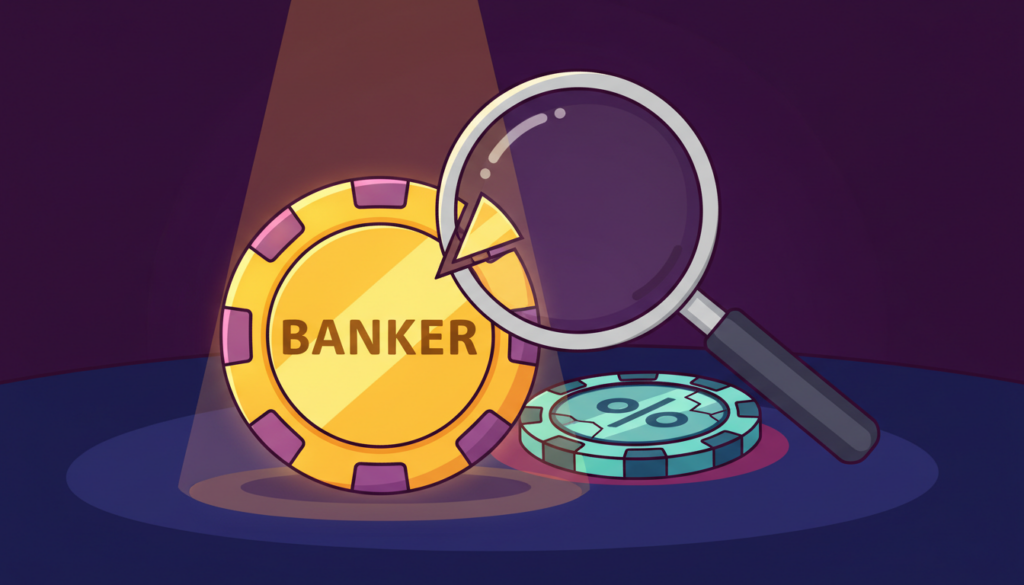
The 5% commission on Banker wins is often a point of confusion for new players. Some might wonder, “If I have to pay commission, why is it still the best bet?” The answer, as we’ve discussed, lies in the underlying probabilities. The Banker’s hand simply wins more often. If there were no commission, the casino would quickly go broke, as players would have a slight positive expectation. The commission balances the game, ensuring the casino maintains its minimal edge while still offering players one of the most favorable wagers in the entire establishment.
Sometimes, casinos offer “no commission” Baccarat. While this sounds appealing, it almost always comes with a catch. For example, a common variant is that if the Banker wins with a total of six, the payout is 50% (0.5:1) instead of even money (1:1). When you do the math, this adjustment usually results in a house edge that is higher than the standard 1.06% with commission. High rollers are acutely aware of these variations and will always scrutinize the specific rules before placing their bets.
VIII. Strategic Considerations Beyond the Bet Itself

While the Banker bet is the cornerstone, high rollers also employ other strategies to optimize their Baccarat experience.
A. Impeccable Bankroll Management
This is non-negotiable. High rollers have strict limits on how much they are willing to wager per session and per trip. They understand that even with the best odds, variance is a factor. They never chase losses and know when to walk away. Their discipline is often as impressive as their bankroll.
B. Table Limits and Availability
For players wagering hundreds of thousands, finding tables with appropriate limits is crucial. Casinos often cater to these individuals with dedicated VIP areas and higher maximum bets. Sometimes, they even negotiate special limits directly with the casino management. Many online platforms also offer high-limit Baccarat tables to accommodate significant wagers, providing convenience and privacy for those who prefer to play from home.
C. Maximizing Comps and VIP Programs
High rollers generate significant revenue for casinos, and casinos reciprocate with lavish “comps” (complimentaries) and exclusive VIP programs. This can include free luxury suites, private jet travel, fine dining, and personal hosts. While not directly part of the game’s strategy, these perks significantly enhance the overall value proposition for a high roller, further offsetting some of their expected losses from the house edge. Players looking to maximize their rewards should consider cashback for high roller baccarat - En cashback offers, which can provide meaningful returns on larger wagers. Additionally, VIP perks for baccarat players - En loyalty program perks often include exclusive bonuses and privileges that enhance the overall gaming experience. When making substantial deposits to fund your baccarat sessions, look for casinos offering payment bonuses for high deposits - En payment method bonuses, which can provide instant value on your initial bankroll.
D. Emotional Discipline
Perhaps the most understated strategy for high rollers is their emotional control. Baccarat, with its rapid pace and high stakes, can be an emotional rollercoaster. A streak of losses can be disheartening, and a run of wins can lead to overconfidence. The seasoned high roller maintains a steady demeanor, adhering to their predetermined strategy and bankroll limits, regardless of short-term outcomes. They separate emotion from decision-making, a critical skill when millions are on the table.
IX. The Human Element: Beyond the Numbers

Despite all the talk of statistics and rational choices, Baccarat, even for high rollers, isn’t entirely devoid of human drama. There’s the thrill of the squeeze, the anticipation as the cards are slowly revealed, often by the player themselves in VIP settings. There’s the quiet camaraderie or intense focus at the table. It’s a game that commands respect, not just for its mathematical elegance, but for the sheer courage and discipline it demands from those who play it at the highest levels.
The high roller’s affection for the Banker bet isn’t a secret handshake or a superstitious ritual. It’s a testament to a deep understanding of probability and a disciplined approach to risk. It’s about making the smart choice, consistently, over time. It’s about playing the game not just to win, but to play it optimally, minimizing the house’s advantage at every turn.
X. Conclusion: The Banker Bet as a Statement
In the world of high-stakes gambling, where every decimal point matters, the Banker bet in Baccarat stands as a beacon of statistical soundness, a quiet powerhouse that continues to draw the most discerning and financially astute players to its elegant tables. It’s a simple game, yes, but its subtle depths are what make it truly compelling for those who know how to play it best.
For high rollers, the choice is clear. The Banker bet represents not just a wager, but a philosophy: that informed decisions, rooted in mathematical reality and disciplined execution, will triumph over emotion and superstition. It’s a choice that has withstood the test of decades and will undoubtedly continue to guide serious players into the future. When millions are at stake, settling for anything less than the mathematically superior option simply isn’t an option.