
Classic Fruit Machines vs. Video Slots: A Comparison
For decades, the rhythmic whir of spinning reels and the clang of falling coins have been a universal soundtrack in gaming establishments worldwide. Slot machines hold a unique charm, an irresistible allure that transcends generations. But like many enduring forms of entertainment, they’ve undergone a profound transformation. We’ve moved from the purely mechanical contraptions of yesteryear to the dazzling digital spectacles of today. This evolution brings us to a fascinating comparison: the classic fruit machine versus the modern video slot. As someone who has watched this industry grow and change for a long time, I find it a truly compelling story of innovation and enduring appeal.
It’s not merely a technological upgrade, you see. It’s a shift in philosophy, in player experience, and in the very definition of what a “slot game” can be. Understanding these differences isn’t just an academic exercise; it helps us appreciate the clever engineering and psychological design behind these popular games. Let’s wind back the clock a bit and then fast-forward to the present, examining what makes each type of game tick.
The Enduring Allure of Classic Fruit Machines
Our journey begins with the classic fruit machine, a term often used interchangeably with “one-armed bandit” or “pub fruitie,” particularly in the UK. These machines are the ancestors of all modern slots, and their legacy is etched into the very fabric of gaming history.
A Glimpse into History
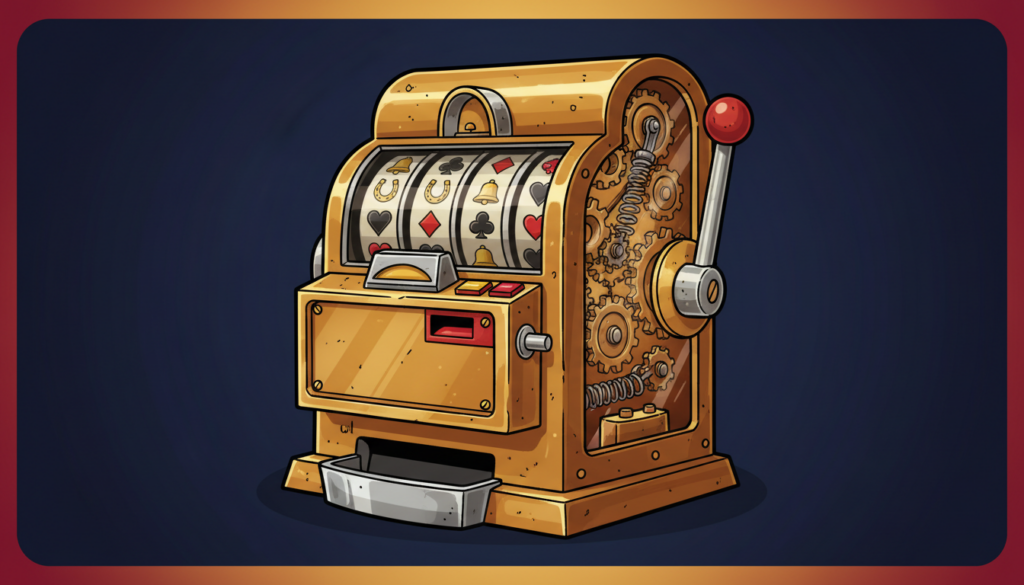
The story of the slot machine truly begins in the late 19th century. Charles Fey, a Bavarian immigrant working in San Francisco, is widely credited with inventing the first truly practical slot machine, the “Liberty Bell,” around 1895. Before this, similar devices existed, but Fey’s creation simplified the mechanism and introduced automatic payouts. His machine had three reels, featuring symbols like horseshoes, spades, diamonds, hearts, and the eponymous Liberty Bell. When three Liberty Bells aligned, the player won the top prize: ten nickels.
These early machines were mechanical marvels. Pulling the side lever (hence “one-armed bandit”) set the reels in motion, and a complex system of gears, springs, and stoppers determined the outcome. The physical nature of these games was a huge part of their appeal. You could hear the gears grinding, feel the lever give way, and watch the reels physically spin and lock into place. It was a tangible experience, a direct interaction with the machine.
Simplicity as a Virtue
What defined the classic fruit machine was its elegant simplicity.
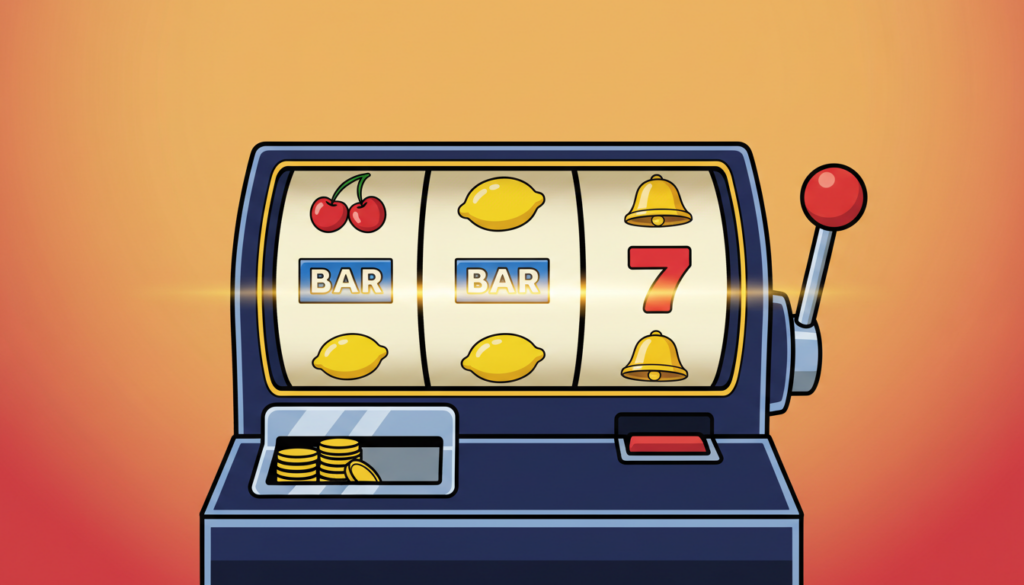
- Fewer Reels and Paylines: Typically, they featured three reels and often just one central payline. Some might expand to three paylines (top, middle, bottom), but complexity was never the goal.
- Iconic Symbols: The symbols were instantly recognizable and have become archetypes in the slot world: cherries, lemons, oranges, plums, bells, bars, and sevens. These weren’t chosen arbitrarily; fruits were initially used to skirt gambling laws by offering “prizes” like chewing gum in those flavors. The “BAR” symbol actually originated from the logo of the Bell-Fruit Gum Company.
- Straightforward Gameplay: There were no elaborate bonus rounds, no cascading wins, no interactive mini-games. You put in your coin, pulled the lever, and waited to see if the symbols aligned. Winning was clear-cut: matching symbols on the payline meant a payout.
- Tangible Feedback: The clunk of the reels stopping, the jingle of coins dropping into the tray, and the flashing lights were all physical cues that made the experience immediate and visceral.
The charm of these machines lay in their unpretentiousness. They offered a direct, uncomplicated form of entertainment, a quick thrill without requiring much thought or strategic planning. For many, they evoke a sense of nostalgia, a simpler time when gaming was less about high-tech wizardry and more about the fundamental excitement of chance. Even today, many players actively seek out these classic iterations, finding comfort in their familiarity and straightforward mechanics.
The Digital Frontier: Modern Video Slots
Fast-forward several decades, and we arrive at the era of the video slot. These machines represent a quantum leap in technology, design, and player engagement, fundamentally reshaping the gaming landscape.
The Dawn of Digital
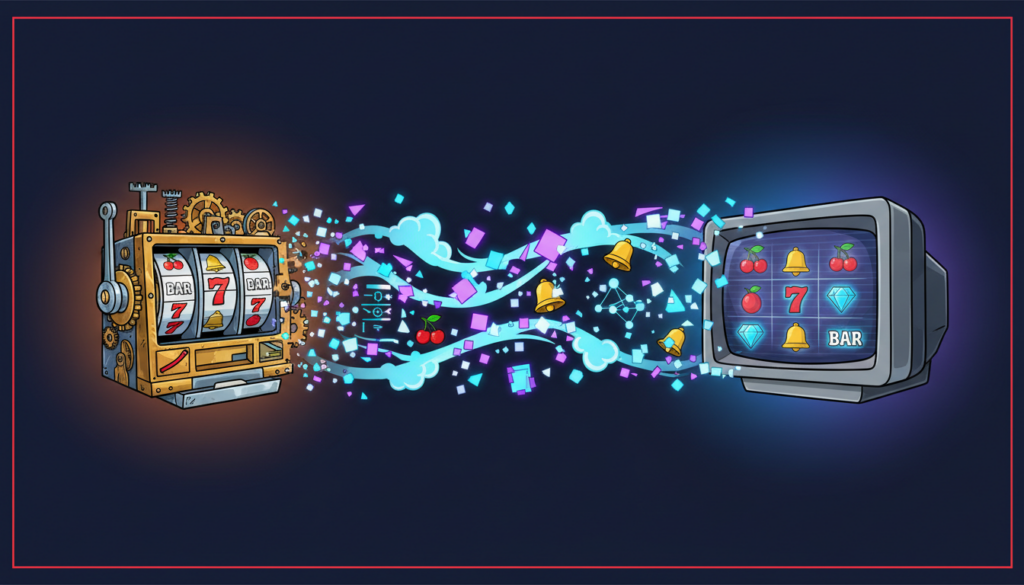
The transition began in the mid-1970s with the advent of video screens. The first true video slot machine, “Fortune Coin,” was developed in 1976 by Walt Fraley and his company. It used a 19-inch Sony Trinitron color television for the display. This innovation meant that physical reels were no longer necessary. Instead, outcomes were determined by a Random Number Generator (RNG), a sophisticated computer program that ensures each spin is entirely independent and unpredictable.
This shift from mechanical to digital was revolutionary. It freed designers from the physical constraints of gears and levers, opening up a universe of possibilities for game creation.
A World of Features and Immersion
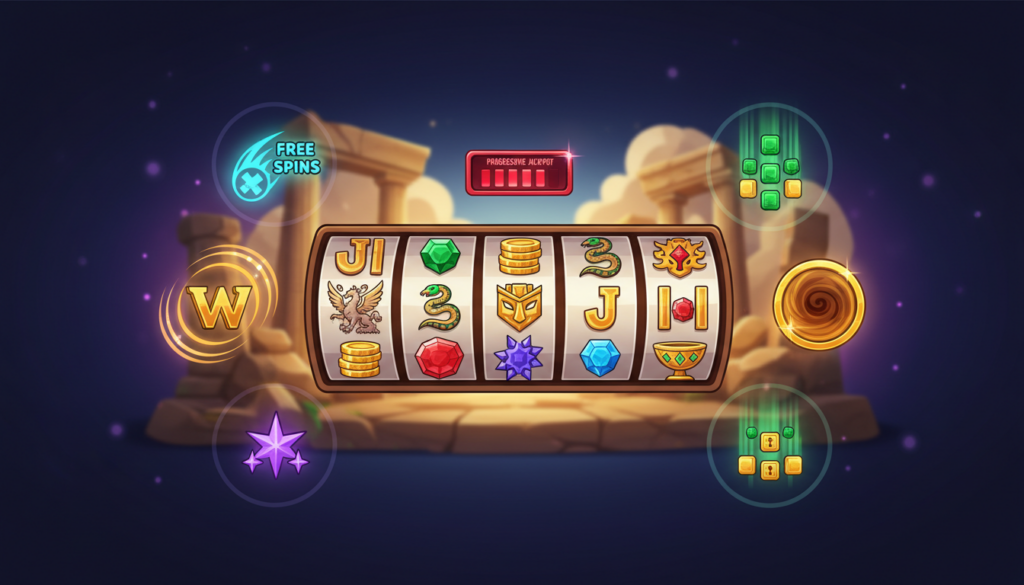
Modern video slots are characterized by their richness and complexity, offering an experience that goes far beyond simply matching symbols. Many modern games also offer free spins on video slots - En free spins, which allow players to extend their gameplay without additional cost.
- Abundant Reels and Paylines: While three-reel video slots exist, the standard today is five reels, often with dozens, hundreds, or even thousands of ways to win (known as “Megaways” or similar mechanics). This vastly increases the number of potential winning combinations.
- Thematic Depth: This is perhaps the most striking difference. Video slots transport players to different worlds: ancient Egypt, futuristic sci-fi realms, mythical lands, popular culture franchises, or serene natural landscapes. High-definition graphics, animations, and cinematic soundtracks create an immersive experience that rivals video games.
- Complex Bonus Features: This is where video slots truly shine. Beyond basic wins, players can trigger:
- Free Spins: A set number of spins without deducting from the player’s balance, often with multipliers or special wild symbols.
- Wild Symbols: Substitutes for other symbols to create winning combinations, sometimes expanding or sticky.
- Scatter Symbols: Pay out regardless of their position on the reels and often trigger bonus rounds.
- Mini-Games: Interactive segments where players might pick objects, spin a wheel, or complete a small task for extra prizes.
- Cascading or Tumbling Reels: Winning symbols disappear, and new symbols fall into their place, allowing for multiple wins on a single spin.
- Progressive Jackpots: A small portion of each wager contributes to a continuously growing jackpot that can reach astronomical sums, often across multiple linked machines or online platforms.
- Interactive Elements: Many video slots incorporate elements that require player input or decision-making, adding another layer of engagement.
- Adjustable Volatility and Return to Player (RTP): Modern slots can be designed with varying levels of volatility (how often and how much they pay out) and RTP (the theoretical percentage of wagered money returned to players over time), allowing for games that cater to different risk appetites.
The appeal of video slots lies in their sheer variety, their capacity for storytelling, and the potential for huge, life-changing wins. They offer a dynamic, ever-changing entertainment experience that keeps players engaged with new features and stunning visuals. Keeping track of the latest new video slot promotions - En new slot promotions can help players discover the most exciting recent releases.
Key Distinctions and Unifying Threads

Now that we’ve explored each type individually, let’s lay out their differences and acknowledge their common ground.
Technological Foundation
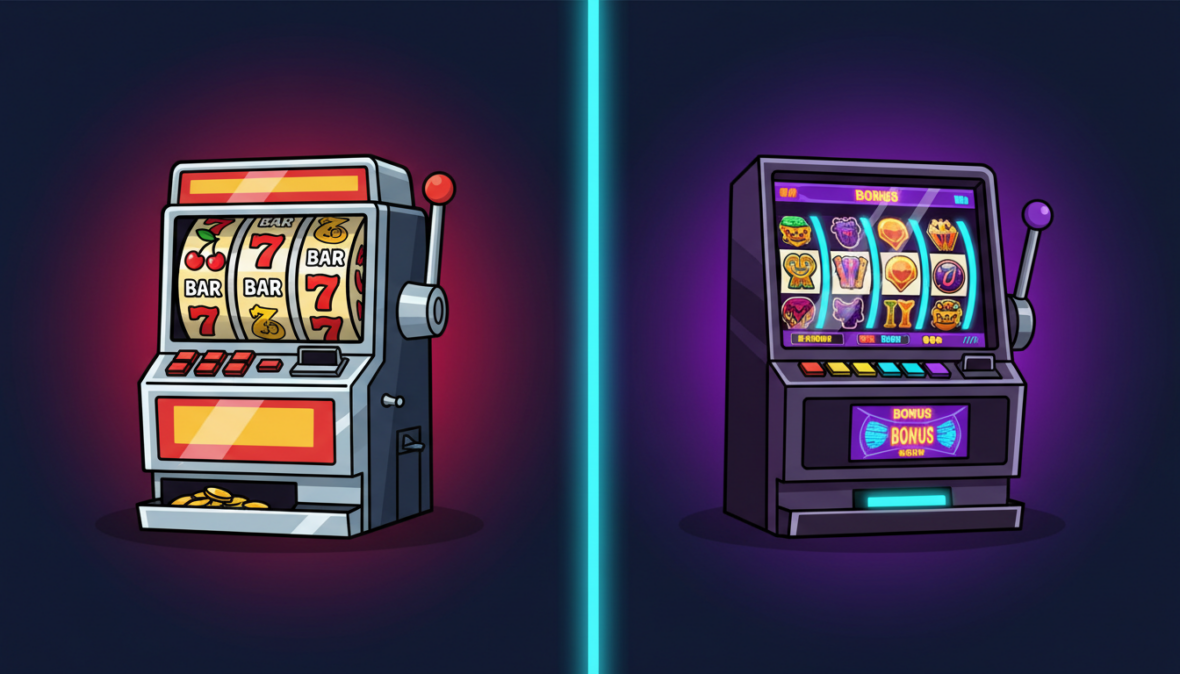
The most fundamental distinction is their underlying technology. Classic fruit machines are predominantly mechanical, relying on physical components to determine outcomes. This provides a tactile, often nostalgic, experience. Video slots, conversely, are entirely digital. Their outcomes are governed by complex algorithms and an RNG, making the physical reels obsolete in favor of virtual representations on a screen. This digital foundation permits immense flexibility in design and features.
Gameplay Complexity and Payout Structures
Classic slots are the epitome of simplicity. They typically have fewer reels, fewer paylines (often just one), and minimal, if any, bonus features. The payout structure is usually straightforward: match a certain number of symbols on the line, and you win. The thrill comes from the immediate, direct outcome of each spin.
Video slots are far more intricate. They boast numerous paylines, sometimes hundreds or thousands of “ways to win.” Their gameplay is enriched by a host of bonus rounds, free spins, multiplying wilds, and interactive features. These additions create a multi-layered experience, offering prolonged engagement and varied winning opportunities. The anticipation isn’t just about a single spin, but often about triggering the next exciting feature.
Visual and Auditory Experience
Visually, classic fruit machines are sparse. Their graphics are basic: bold, primary colors, simple symbols, and minimal animation, if any. The sounds are equally unadorned: the clatter of mechanical reels, the ding of a coin, perhaps a simple jingle for a win. This minimalist aesthetic is part of their charm for those who appreciate understated design.
Video slots are a feast for the senses. They feature high-definition graphics, elaborate animations, and often cinematic soundscapes that immerse the player in the game’s theme. Character animations, dynamic backgrounds, and thematic music contribute to a rich, often storytelling, experience. The visual and auditory elements are designed to captivate and entertain, creating a feeling akin to playing a video game.
Themes and Storytelling
Classic slots are largely devoid of themes beyond their iconic fruit, bell, and bar symbols. Their identity is tied to their mechanical nature and straightforward payouts.
Video slots, on the other hand, are built around themes. From ancient mythology to futuristic adventures, from popular movies to abstract concepts, the thematic possibilities are endless. These themes are not just cosmetic; they are woven into the gameplay, symbols, bonus features, and overall narrative, making each game a distinct experience.
Player Experience and Appeal
For some players, the classic fruit machine offers a comforting, nostalgic retreat. It’s a game where the rules are clear, the pace is steady, and the focus is solely on the spinning reels. It appeals to those who value tradition, simplicity, and a direct, uncluttered gaming session. The tangible feedback of the machine, the physical lever, and the sound of real coins can be incredibly satisfying.
Video slots appeal to players seeking high entertainment value, variety, and the potential for substantial, often progressive, jackpots. They cater to those who enjoy complex mechanics, immersive storytelling, and a dynamic, ever-changing gaming experience. The fast pace, intricate features, and dazzling audiovisuals provide a high-octane thrill that keeps players coming back for more. Many players also look for ways to maximize their playtime, such as claiming deposit free spins - En free spins on deposit to get extra value from their deposits.
The Unifying Thread: The Thrill of Chance
Despite their profound differences, both classic fruit machines and video slots share a fundamental core: the thrill of chance. At their heart, both are about anticipation, the hope of a winning combination, and the rush of a payout. Whether it’s the satisfying click of three cherries lining up or the explosive animation of a mega-jackpot being hit, the underlying human desire for that lucky break remains constant. The element of pure randomness, the possibility of a life-altering win from a single spin, is what binds these diverse machines together.
Choosing Your Spin
So, which is “better”? The answer, as with most things in life, comes down to personal preference.
If you appreciate simplicity, a direct gaming experience, and a touch of nostalgia, the classic fruit machine might be your preferred choice. It offers a straightforward engagement with the core mechanics of slot gaming, a refreshing break from overly complicated digital distractions. It’s about the pure, unadulterated spin.
If you crave immersive themes, intricate bonus features, stunning graphics, and a dynamic, evolving gameplay experience, then video slots will undoubtedly capture your imagination. They are designed to entertain on multiple levels, offering stories, challenges, and the allure of massive, often progressive, payouts. They are the entertainment powerhouses of the modern gaming world.
Many players, myself included, enjoy both, choosing based on their mood or what kind of gaming session they’re looking for. Sometimes, the comforting predictability of a three-reel classic is exactly what’s needed. Other times, the vibrant, feature-rich world of a modern video slot provides the perfect escape.
The Enduring Legacy

The journey from the mechanical marvels of Charles Fey to the digital masterpieces of today is a testament to human ingenuity and the enduring appeal of games of chance. Classic fruit machines laid the groundwork, establishing the fundamental concepts that still resonate. Video slots took those concepts and expanded them exponentially, leveraging technology to create experiences that were once unimaginable.
Both styles have carved out their own niches and continue to thrive, proving that there’s room for tradition and innovation to coexist. The next time you find yourself in front of a slot machine, take a moment to appreciate the incredible lineage behind it, and enjoy the spin, whatever your preference may be. After all, the heart of the game, that hopeful flutter as the reels come to a stop, remains unchanged.