
What Near-Misses Are Actually Doing to Your Brain
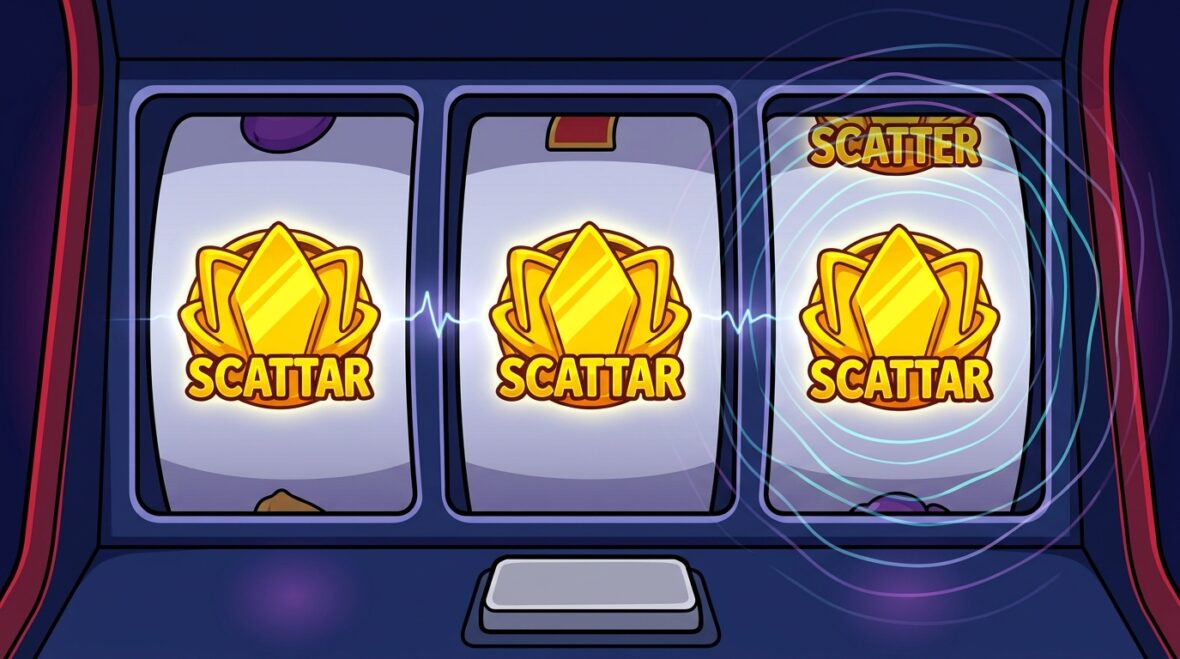
Two scatter symbols landing next to a third that missed by a single position used to send a jolt through me that felt almost identical to actually winning. I noticed that reaction long before I understood why it was happening, just a strange little spike of excitement over something that, technically, was a loss. Once I started reading about the psychology behind it, particularly how it shows up during free spins rounds - En free spins where the stakes already feel elevated, the whole thing made a lot more sense, and honestly got a little less fun.
Near-misses are a well-documented phenomenon in gambling research, not something unique to me or slots specifically. The pattern shows up across all kinds of chance-based games, but slots are particularly well suited to triggering it because of how visually explicit a near-miss can be. Watching a third matching symbol stop just one row short of a win is a very different experience from an abstract “you didn’t win this time.”
What’s Actually Happening in Your Brain
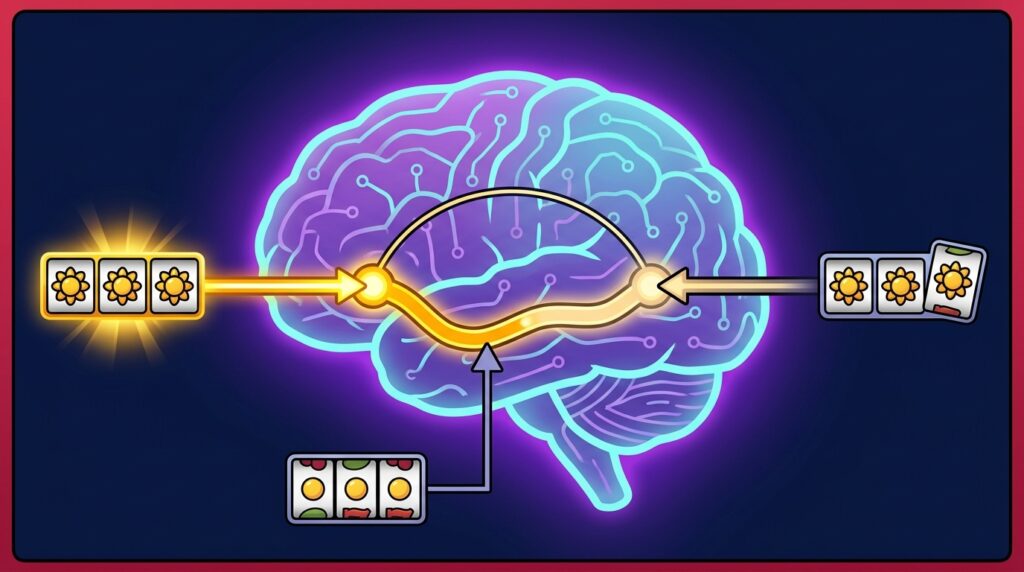
Research on near-misses points to activity in the brain’s reward circuitry that overlaps significantly with actual wins, even though no reward has been delivered. Essentially, a near-miss gets processed by parts of the brain as evidence of “almost,” which triggers a small dopamine response similar to what happens on an actual win, just weaker. That’s the mechanism behind the jolt I used to feel, and it’s not a personal quirk, it’s a fairly universal response wired into how humans process near-successes.
What makes this particularly interesting, and a little unsettling once you know it, is that a near-miss and a full miss carry identical objective information. Both mean you didn’t win. But the brain doesn’t treat them the same way, and that mismatch between the objective outcome and the felt experience is exactly what slot designers understand and, whether deliberately or as an emergent effect of good game design, lean into.
Why This Isn’t Necessarily Sinister
I want to be careful not to frame every near-miss mechanic as a deliberate manipulation, because some of it is simply a byproduct of how reel mechanics work rather than an intentional psychological trap. A five-reel slot with a specific symbol distribution is going to produce near-misses at some natural rate just from the math of how symbols land, independent of any intent to maximize that specific effect. Understanding the mechanism doesn’t require assuming bad faith on every developer’s part.
How Often Near-Misses Actually Happen
Once I started paying attention, near-misses turned out to happen far more often than actual wins on most slots I play regularly, which lines up with what the reel math would predict given how symbols are typically weighted. A near-miss requires landing symbols close to a winning combination without completing it, and that near-completion state is inherently more common than actual completion on any game with meaningful house edge built in. I hadn’t consciously tallied this before, but once I started counting, the ratio was higher than I expected, sometimes three or four near-misses for every real win in a given session.
That ratio varies by game, and some titles seem to produce visually dramatic near-misses more consistently than others, which makes me suspect certain symbol weightings are chosen partly with that visual effect in mind. I don’t have access to the actual reel math most studios use, so I can’t confirm intent either way. What I can confirm from my own tracking is that the frequency is real and noticeable once you’re actually counting instead of just feeling the reaction pass by unexamined.
How This Changed My Session Behavior
Recognizing the near-miss effect for what it is changed how I react to it mid-session, even though the felt jolt hasn’t disappeared entirely. I still get that small spike of excitement when symbols land close to a win, but I’ve trained myself to consciously note “that’s a near-miss, not progress toward anything” rather than let the feeling translate into an urge to keep spinning. That small mental relabeling has done more to control my session length than any external limit I’ve set.
Before understanding this, a string of near-misses used to feel like momentum building toward an inevitable win, a completely false read on independent, random spins that have no memory of what came before. I now treat a cluster of near-misses the same way I’d treat a cluster of actual losses, as information about variance rather than a signal that a win is somehow due. That reframing has been uncomfortable at times, since the emotional pull toward “just one more spin” after a close near-miss is genuinely strong.
The Specific Trap of Bonus Round Near-Misses
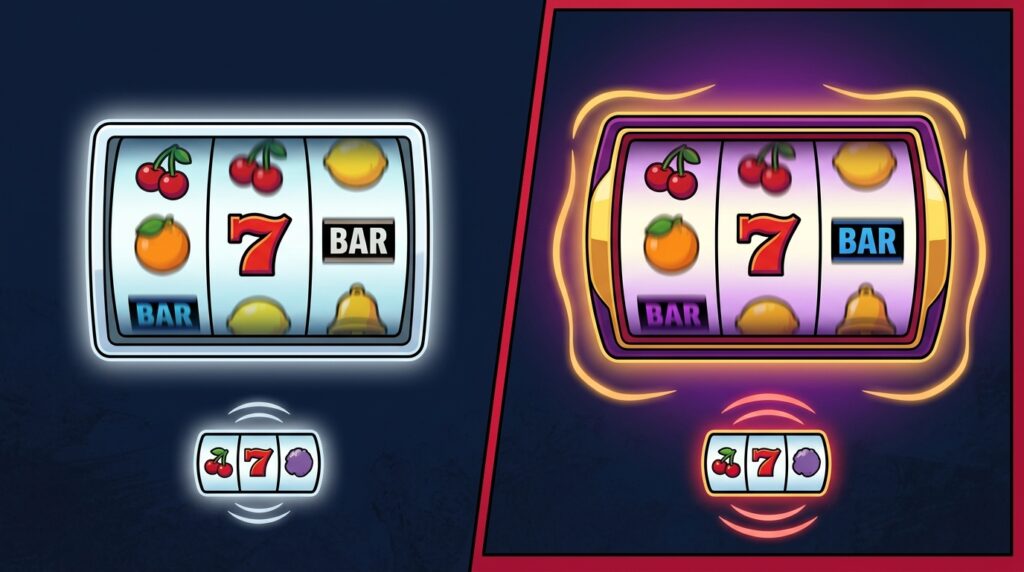
Near-misses during free spins rounds hit differently than base game near-misses, since the stakes already feel elevated and a near-miss during a bonus round can feel like watching a big win slip away rather than a routine spin resolving normally. I’ve noticed my own reactions are stronger during these moments, probably because the bonus round already primed me to expect something bigger than usual. That heightened expectation seems to amplify the near-miss effect specifically.
I try to remind myself during bonus rounds that each spin within the feature is still independent, carrying no memory of the near-misses that came before it in that same round. It’s a hard reminder to internalize in the moment, since the emotional pull of a bonus round in progress is stronger than a calm, rational read of independent probability. Knowing the theory hasn’t made the feeling disappear, just made me slightly better at not acting on it impulsively.
Do Developers Deliberately Engineer This?
I’ve read conflicting takes on how deliberately studios engineer near-miss frequency, and I don’t think there’s a single universal answer across the industry. Some jurisdictions actually regulate near-miss mechanics specifically, restricting how symbol weighting can be used to artificially inflate near-miss frequency beyond what natural reel math would produce. That regulatory attention suggests the effect is well enough understood, and potentially exploitable enough, that regulators have decided it’s worth constraining in certain markets.
Whether a specific game I’m playing is regulated that way isn’t something I can easily verify myself, which is part of why I’ve stopped trying to reverse-engineer intent from any individual near-miss and instead just focus on managing my own reaction to it. The mechanism matters more to my behavior than the motive behind it. Knowing that near-misses trigger a real, measurable brain response regardless of why is enough information to act on.
Comparing New Releases
I’ve started paying closer attention to near-miss frequency specifically when trying titles from a batch of fresh slot promotions - En new slot promotions, partly out of the same curiosity that got me interested in this topic in the first place. Some new releases seem to lean harder into visually dramatic near-misses than others, and I’ve noticed I personally enjoy those games less once I’m consciously aware of what’s happening, even though the underlying math might be perfectly fair. That awareness has quietly changed which new titles I end up sticking with.
It’s an odd side effect of understanding the psychology, that knowing the mechanism can make certain games feel less appealing rather than more, purely because I can see the lever being pulled. I don’t think that’s true for everyone, and plenty of players enjoy near-miss-heavy games without any of this awareness dampening the fun. For me personally, though, the knowledge has changed my taste in games more than I expected it would.
Bonus Buy Features and the Near-Miss Effect
Buying directly into that bonus buy feature - En buy bonus feature promo skips past the near-miss buildup of the base game entirely, which is one reason I’ve occasionally used it on games where I found the base game’s near-miss frequency more stressful than fun. Paying to jump straight to the feature removes the drawn-out anticipation that near-misses create, for better or worse depending on what you’re actually looking for from a session. Some players specifically enjoy that slow buildup and would see skipping it as missing the point.
I use bonus buys selectively for this reason now, mainly on titles where I’ve noticed the near-miss pattern in the base game feels more manipulative than enjoyable to me personally. It’s not a universal strategy, and the cost of buying in adds up fast if used often. But as a tool for sidestepping a specific psychological effect I’ve become more sensitive to, it’s occasionally worth the premium.
What I’d Tell Someone Just Learning About This
If this is the first time you’re hearing about the near-miss effect, I’d say the most useful thing you can do is just notice it happening the next few times you play, without trying to change your behavior immediately. Pay attention to that small jolt when symbols land close to a win, and consciously label it for what it is rather than letting it pass by unexamined. That awareness alone tends to blunt the effect somewhat, even before you make any deliberate behavioral change.
I don’t think understanding this makes slots less enjoyable overall, just more transparent in a way I’ve personally found useful for managing session length and spending. Knowing why a near-miss feels the way it does hasn’t stopped me from playing slots I enjoy, it’s just made me a slightly more clear-eyed player about what’s actually happening when the reels stop one symbol short of a win.
A Personal Experiment I Ran
Curious how much the near-miss effect was actually driving my play, I ran a rough personal experiment over a few sessions, deliberately tracking how long I kept playing after a cluster of near-misses versus after a cluster of plain, uneventful losses. The pattern was clear enough within just a handful of sessions to convince me the effect was real in my own behavior, not just something I’d read about happening to other people. Sessions with several near-misses in a short stretch ran noticeably longer than sessions with an equivalent number of flat, unremarkable losses.
That difference wasn’t subtle, either. On average, a cluster of near-misses seemed to buy an extra ten or fifteen minutes of play compared to a cluster of plain losses of the same size, even though both represented identical financial outcomes. Seeing that gap in my own informal data made the abstract psychology research feel a lot more concrete and personally relevant than it had before I bothered to check.
How Sound Design Reinforces the Effect
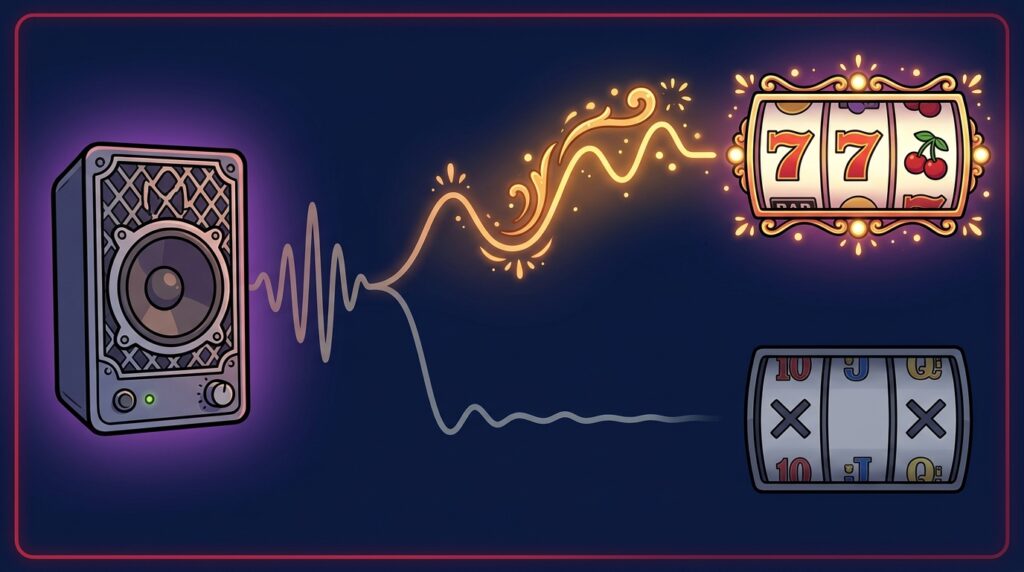
Beyond the visual near-miss itself, I started noticing how much sound design contributes to the feeling of “almost,” with certain games playing a distinct audio cue specifically when a near-miss occurs, different from the flat, unremarkable sound of a plain loss. That audio distinction reinforces the emotional read of a near-miss as meaningfully different from a regular miss, even though objectively they’re identical outcomes. Once I noticed the sound cue specifically, I couldn’t unhear it, and it made the whole mechanic feel more deliberately constructed than I’d previously assumed.
I don’t know whether every studio designs that audio cue with the near-miss effect specifically in mind, or whether it’s more of an emergent choice that happens to reinforce an existing psychological pattern. Either way, once I identified the sound as a distinct trigger separate from the visual near-miss itself, I found myself able to partially tune it out, treating it more like background noise than a meaningful signal. That small shift in attention has helped more than I expected.
Reading About the Regulatory Angle
Digging into how different jurisdictions handle near-miss regulation gave me a better sense of just how seriously this effect is taken outside of casual player discussion. Some regulators specifically prohibit reel weighting designed to artificially increase near-miss frequency beyond what natural symbol distribution would produce, treating it as a form of deceptive design rather than a neutral byproduct of game mechanics. That regulatory stance suggests the effect isn’t just a minor curiosity, it’s considered significant enough to actively legislate against in certain markets.
Knowing that regulatory attention exists has made me somewhat more trusting of games built for tightly regulated markets specifically, on the assumption that heavier oversight reduces the likelihood of near-miss frequency being deliberately inflated beyond natural levels. I can’t verify that assumption game by game, but it’s become one more small factor I consider when deciding which titles and which casinos to spend time with.
My Bottom Line
Near-misses trigger a real, measurable response in the brain that overlaps with how wins get processed, even though nothing was actually won, and that mismatch is worth understanding if you play slots regularly. It’s not necessarily a sinister design trick, sometimes it’s just an emergent property of how reels work, but the effect on player behavior is real either way. Once I started consciously labeling near-misses for what they are, that little jolt lost some of its pull, and my sessions have been better for it.